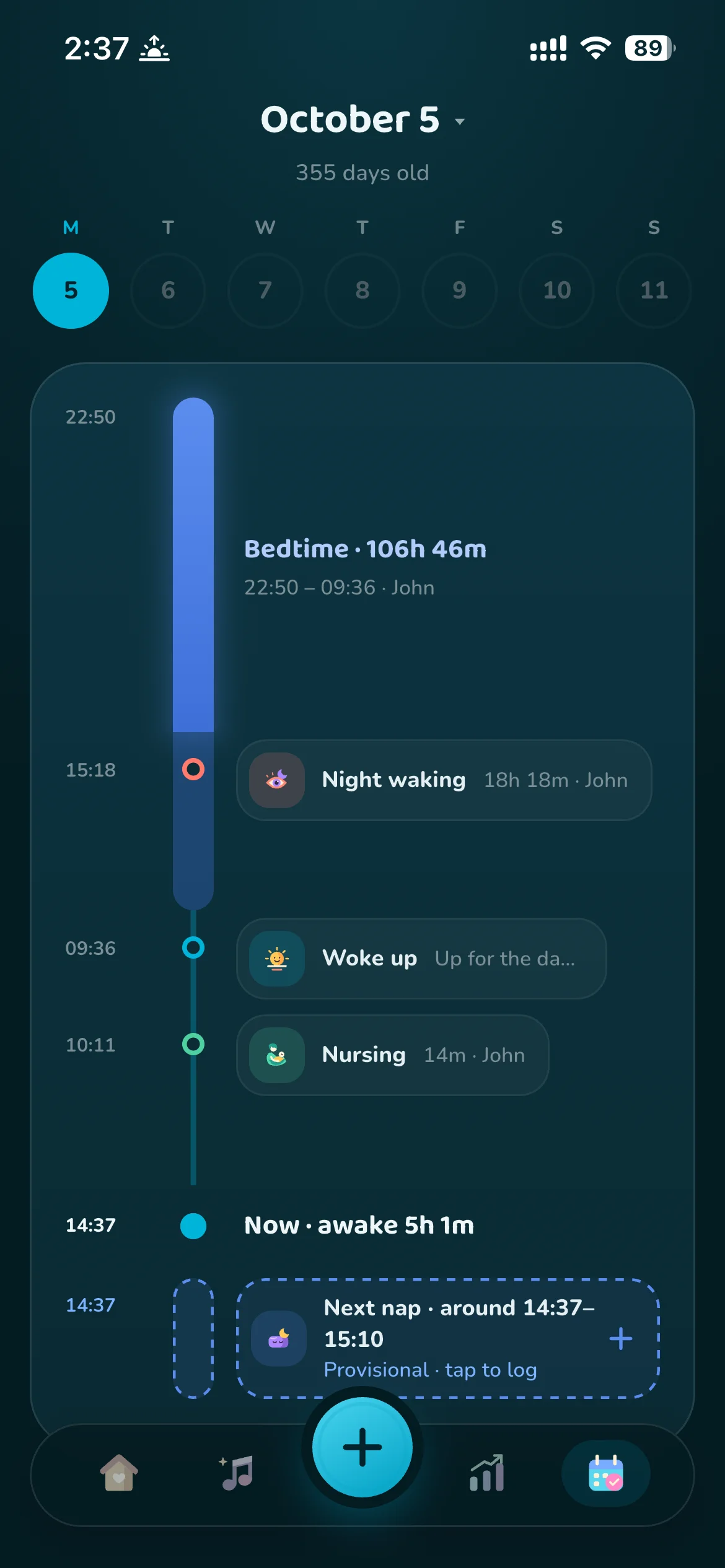
Cradle suggests an upcoming nap window for eligible babies, using their age and the sleep you log. It is a possible time to offer a nap, with room to follow your baby’s cues.
Guidance for eligible babies with suitable sleep records
Baby’s age
Available guidance
Under 2 months
Sleep logging and history; no predicted nap windows.
2 to under 4 months
Gentle next-nap guidance.
4 to under 25 months
More personalized windows and duration estimates when suitable history is available.
25 months and older
Sleep logging and history; next-nap predictions stop.
Age is one eligibility check. Usable sleep records, current sleep state and care context also affect whether a window appears.
Start with their age and sleep records
Set up your baby’s profile with their date of birth, then log naps, bedtimes and wake-ups. Completed sleep records give Cradle information about awake time and nap length. Predictions appear when suitable records are available; they are not an instant schedule for a newly created profile.
How does Cradle calculate the next nap window?
Cradle looks at the previous 14 completed days of recorded sleep. When enough comparable history is available, it compares similar naps—for example, first naps with other first naps—and looks at the awake time before them. It uses a range from those observations to suggest a window after the current wake-up. Recorded nap lengths help estimate a duration range too.
A window, rather than a deadline
Cradle shows the next nap opportunity, rather than a fixed plan for the entire day. From four months, suitable history also helps shape estimated nap lengths. A suggested window does not guarantee when your baby will fall asleep or how long they will sleep.
What happens with less history?
When there are too few comparable naps, Cradle can use awake intervals from other logged naps or the clock times of past naps. These fallback suggestions are less personalized. Sparse or irregular records do not automatically mean you must wait seven days, but Cradle still needs usable completed naps. It does not invent a generic age-based schedule when there are no usable records.
What estimated reliability means
If a prediction shows an estimated reliability score, it describes the amount, consistency and type of logged history supporting that suggestion. A score of 59/100 does not mean the prediction is 59% accurate or that your baby has a 59% chance of sleeping in the window. Prediction accuracy has not been established by that score.
Why is no nap window showing?
Age alone does not make a baby eligible. Predictions may be paused when prematurity or medical and feeding context is unknown or restricted, or when illness or travel disrupts the usual baseline. An active sleep session, unclear current sleep state, or no remaining nap window before bedtime can also prevent a suggestion. Logging and history remain available.
Keep logging as the routine changes
Record sleep consistently, mark morning wake-ups, and correct missed or inaccurate entries. Where the app asks you to confirm complete logging, confirm only periods when all sleep was recorded. Suggestions are recalculated as relevant records change. Keep the current sleep state up to date rather than treating an earlier window as a fixed appointment.
Do I need to log seven days before I see a prediction?
There is no fixed seven-day wait for every baby. Eligibility depends on age, current sleep status and usable sleep records. More consistent history helps personalize the guidance, while sparse history may produce a less personalized suggestion or no window yet.