How do I prevent and treat diaper rash?
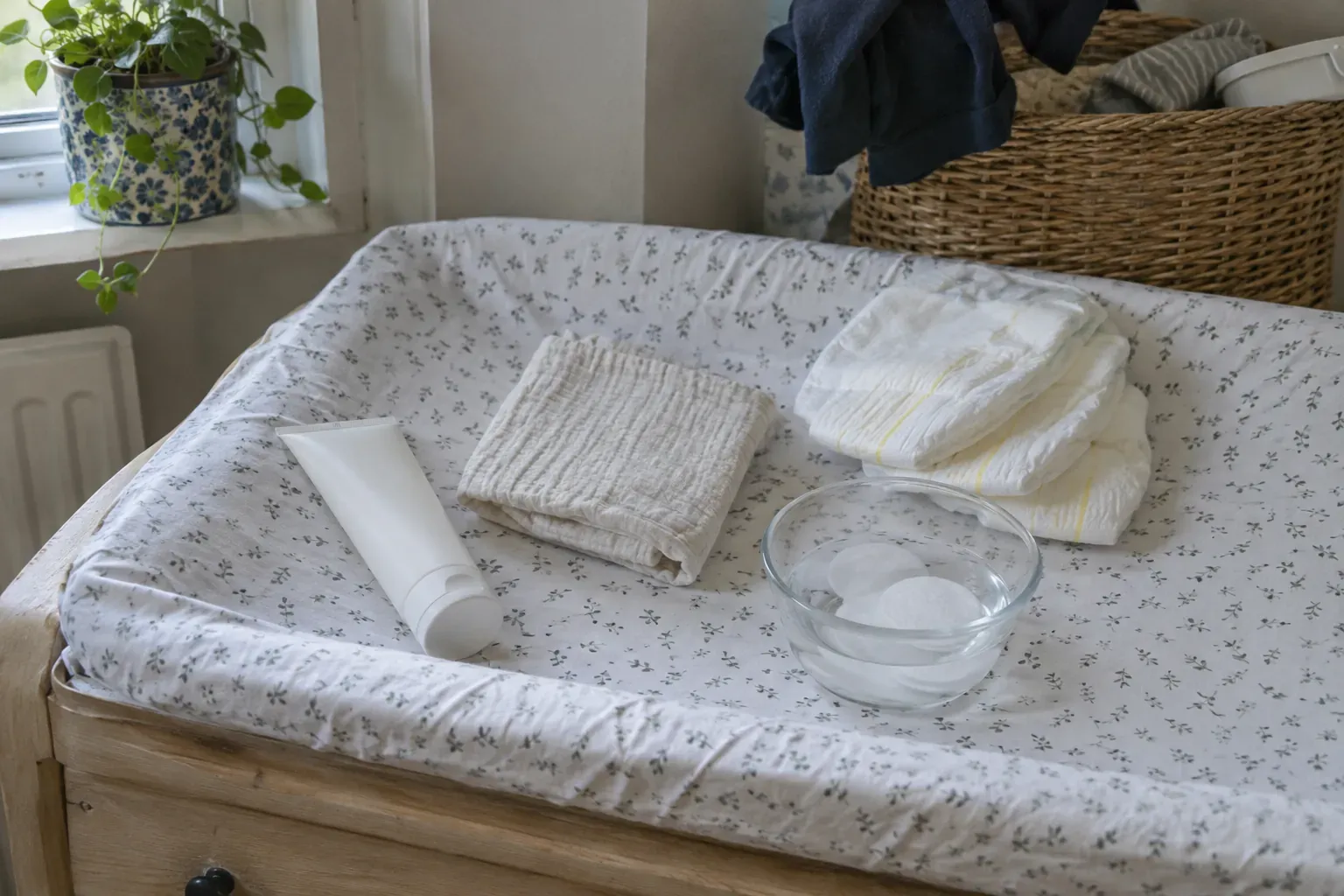
Diaper rash is sore, red skin in the diaper area, and most cases come from urine and stool sitting against the skin, plus the rubbing of the diaper itself. You prevent it by changing diapers as soon as they are wet or dirty, cleaning gently with water or alcohol-free, fragrance-free wipes, patting the skin dry and giving it some air, then putting on a thick layer of barrier cream with zinc oxide or petroleum jelly and fastening the diaper loosely. A mild rash usually clears with that routine. A rash with fever, blisters, pus, bright red patches with spots at the edges, or one that spreads or isn’t better after 2 to 3 days needs a call to your pediatrician.
What causes diaper rash?
The American Academy of Pediatrics (AAP) says the main irritants are urine and stool. Moisture from leaving a wet or soiled diaper on too long makes the skin chafe, and a tight diaper rubs, especially overnight. The NHS gives the same list: skin in contact with pee or poo for a long time, not changing or cleaning often enough, and the diaper rubbing against the skin.
Some things make a rash more likely:
- Diarrhea and teething. The AAP says the chance of a rash is greater when a baby has diarrhea or is teething, because extra swallowed saliva passes through the gut. The NHS lists diarrhea too.
- New foods. The AAP says some babies start getting diaper rash after they begin solids, because the change in diet alters digestion and the frequency and content of bowel movements.
- Antibiotics. The AAP says antibiotics can kill some of the “good” bacteria in the gut, leading to diarrhea, and can also allow a yeast overgrowth. A yeast rash often shows up after a course of antibiotics. The NHS lists antibiotics and laxatives among the medicines that can cause nappy rash.
- Yeast. The AAP says a fungus found naturally in the digestive tract can overgrow, and calls this a fairly common cause.
- Products. The AAP says some babies react to dyes, fragrances or preservatives in diapers, wipes and creams, though this is rare. The NHS points to fragranced wipes, wipes containing alcohol, and soap, detergent or bubble bath.
- Non-breathable diapers. The NHS says non-absorbent or non-breathable materials can contribute.
How do I prevent diaper rash?
The routine below comes from the AAP and NHS, and it is both the prevention and the first treatment for a mild rash.

- Change often. The AAP says to change diapers frequently and keep urine and stool off the skin. The NHS says to change wet or dirty diapers as soon as possible. The AAP’s “Ask the Pediatrician” page suggests changing every 3 to 4 hours, or whenever the diaper is soiled.
- Clean gently. The AAP recommends wipes free of alcohol and fragrance, or water with a gentle non-soap cleanser. The NHS says to clean the skin with water or fragrance-free, alcohol-free wipes, and not to use soaps, baby lotion or bubble bath on the area. If the skin is already sore, the AAP suggests a spray bottle of water instead of rubbing with a wipe.
- Pat dry and allow air time. Both the AAP and the NHS say to pat gently and let the skin air-dry. The NHS also suggests leaving the diaper off when you can, and its nappy changing page notes that wearing a nappy all the time makes rash more likely.
- Protect. The AAP says to apply a thick layer of barrier paste, and that zinc oxide and petrolatum (petroleum jelly) are both good choices, fragrance-free products best. At the next change, the AAP says you don’t need to scrub the old paste off; add more on top of clean skin. The NHS describes a thin layer of barrier cream at each change; either way, the aim is a layer between skin and diaper.
- Keep the fit loose. The AAP says to make sure the diaper isn’t too tight, especially overnight. The NHS says not to fasten nappies too tightly and to make sure they fit properly. If the elastic leaves red marks, the AAP suggests fastening more loosely or going up a size.
A few extras from the same pages: the AAP suggests highly absorbent diapers, and says cloth diapers may be less absorbent, so some families use disposables until a rash heals. For cloth diapers, the AAP says to skip fabric softeners and anti-static products, and the NHS says to use dry liners and change them often. The NHS also says no talcum powder, no plastic pants over nappies, and a daily bath but not more than twice a day, because too much washing dries the skin.
If you want to see how long your baby actually goes between changes, a notepad works. So does an app. Cradle: Baby Sleep Tracker by Zorest logs each diaper change next to feeds and sleep and shows the last diaper time on the day’s timeline. Our round-up of the best apps for tracking baby diapers covers the alternatives.
How do I treat diaper rash at home?
For a plain irritant rash, treatment is the prevention routine done more carefully. The AAP’s advice is a thick barrier cream with zinc oxide or petrolatum at every change, gentle cleaning, air-drying, and a daily bath while the area is irritated, with the barrier paste reapplied afterwards. The NHS says a pharmacist can recommend a nappy rash cream or medicine if the rash is bothering your baby, and may suggest a barrier cream at each change.
Two things to avoid: the AAP says not to use over-the-counter antibiotic ointment on a diaper rash, and the NHS says not to use antiseptic creams or lotions on it either.
If you suspect a product is the cause, the AAP suggests switching diapers, wipes or cream to a different type and giving it a 2-week period to see whether the rash clears.
Since stool is one of the main irritants, loose or more frequent poops often go along with a rash. Our posts on what newborn poop colors mean and how many wet diapers a newborn should have cover what is normal in the diaper.
How do I know if it’s a yeast infection?
A yeast rash needs different treatment from an irritant rash, so it helps to know what one looks like.
The AAP lists these clues: shiny, bright red or pink patches with sharp edges, sometimes with little pink bumps or pimples. Unlike an irritant rash, a yeast rash is usually worse in the groin folds. In severe cases, the AAP says there may be cracking, oozing or bleeding skin. A 2016 review in the journal Mycopathologia describes the same picture, red scaly plaques with small “satellite” spots or pustules around the edges, and calls those satellite spots the most characteristic feature of a Candida yeast infection. The review also notes that broad-spectrum antibiotics increase Candida.
A barrier cream is not a treatment for yeast. The AAP says your pediatrician may prescribe an antifungal cream, and the NHS says a GP may prescribe one if they think your baby has thrush. If the rash matches the description above, or appears while your baby is on antibiotics, call rather than wait it out. The AAP also suggests washing your hands before and after changes.
When should I call my pediatrician?
The AAP says to contact your child’s doctor if:
- the rash is not going away, or is getting worse, after 2 to 3 days of treatment
- the rash includes pimples, peeling skin, blisters, or pus-filled, oozing or crusty sores
- your baby is taking an antibiotic and develops a bright pink or red rash with red spots at the edges
- the rash is especially painful, which the AAP says could be a sign of cellulitis
- your baby has a fever in addition to the rash
The NHS adds: see a health visitor or GP if the rash does not go away, gets worse or spreads to other areas beyond the diaper area, if your baby has a high temperature, or if your baby seems very uncomfortable.
If the rash isn’t clearing within a few days, or you’re unsure what you’re looking at, a quick call is reasonable.
Sources
- Common Diaper Rashes & Treatments (HealthyChildren.org, American Academy of Pediatrics)
- Why is my baby always getting diaper rashes? (HealthyChildren.org, American Academy of Pediatrics)
- Nappy rash (NHS)
- How to change your baby's nappy (NHS)
- Superficial Mycoses Associated with Diaper Dermatitis (Mycopathologia, 2016, PMC)
This article is for general education and is not medical advice. Talk to your pediatrician about your baby's health.