How should I dress my baby for sleep, and what room temperature is right?
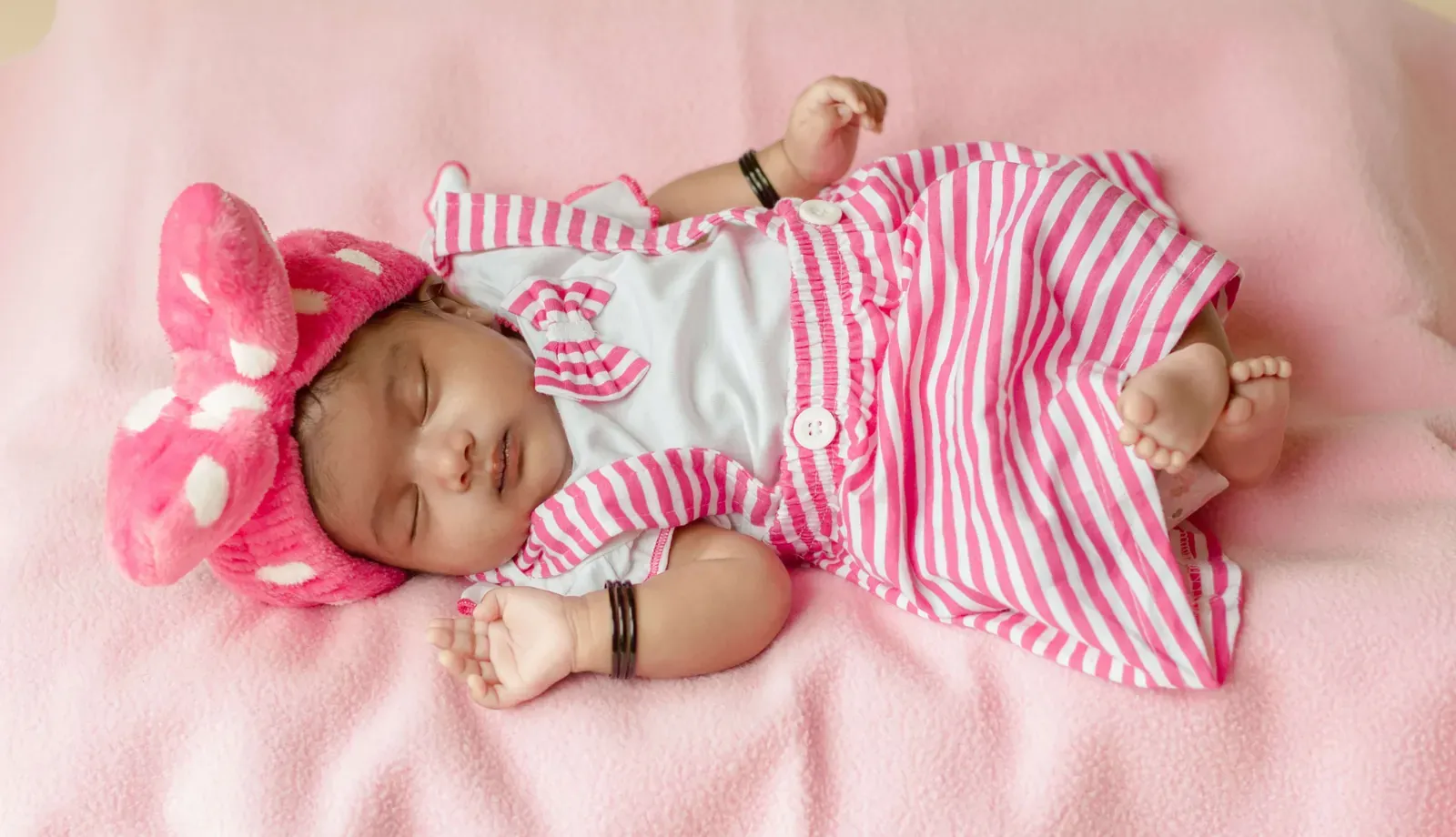
Dress your baby for sleep in no more than one layer more than you’d be comfortable in yourself, use a sleep sack or wearable blanket instead of loose blankets, and don’t use a hat indoors. Keep the room at a comfortable temperature. The NHS suggests about 16 to 20°C (roughly 61 to 68°F). To check whether your baby is too warm, feel their chest or the back of their neck. Cool hands and feet are normal.
Why does overheating matter for babies?
The American Academy of Pediatrics (AAP) lists avoiding overheating among its main recommendations for reducing sleep-related infant deaths, alongside placing babies on their back on a firm, flat surface. NICHD’s Safe to Sleep campaign says too many layers of clothes or bedding for the room temperature can overheat a baby, and that overheating raises the risk of sudden infant death syndrome (SIDS).
How many layers should my baby wear to sleep?
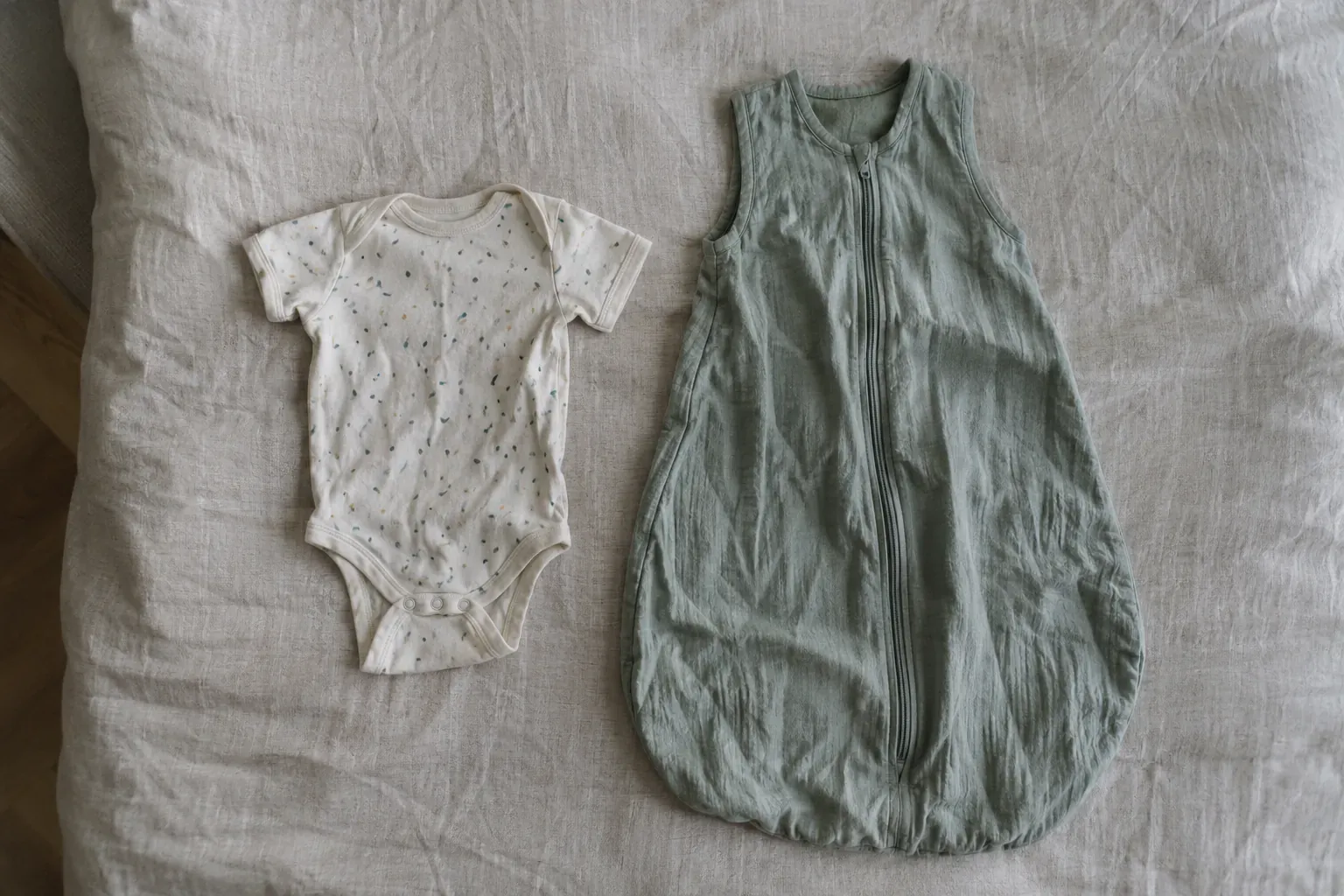
The AAP’s rule of thumb: your baby needs only one more layer than you would wear in the same room to be comfortable. For example, if you’re comfortable in a T-shirt, a onesie plus a sleep sack is usually enough. If you’d want a sweater, add a layer under the sleep sack.
The AAP says dressing your baby in layers of clothing is safer than using blankets, and that wearable blankets or sleep sacks are fine if they fit your baby’s size and don’t cover the head. NICHD agrees: for warmth, use a wearable blanket or an extra layer of clothing rather than bedding.
Keep the crib itself bare: a firm, flat mattress with a fitted sheet, and no pillows, bumpers, loose blankets or soft toys. Our ABCs of safe sleep post covers the full setup.
What room temperature is right for a baby?
The NHS recommends keeping the room at about 16 to 20°C, checked with a room thermometer. That’s roughly 61 to 68°F. The AAP and NICHD don’t give a number. The AAP’s advice is to keep the room at a comfortable temperature.
The NHS also advises:
- Never use a hot water bottle or electric blanket for a baby.
- Don’t put your baby to sleep next to a radiator, heater or fire, or in direct sunlight.
- Use lightweight sheets or a baby sleeping bag rather than heavy bedding.
How can I tell if my baby is too hot or too cold?
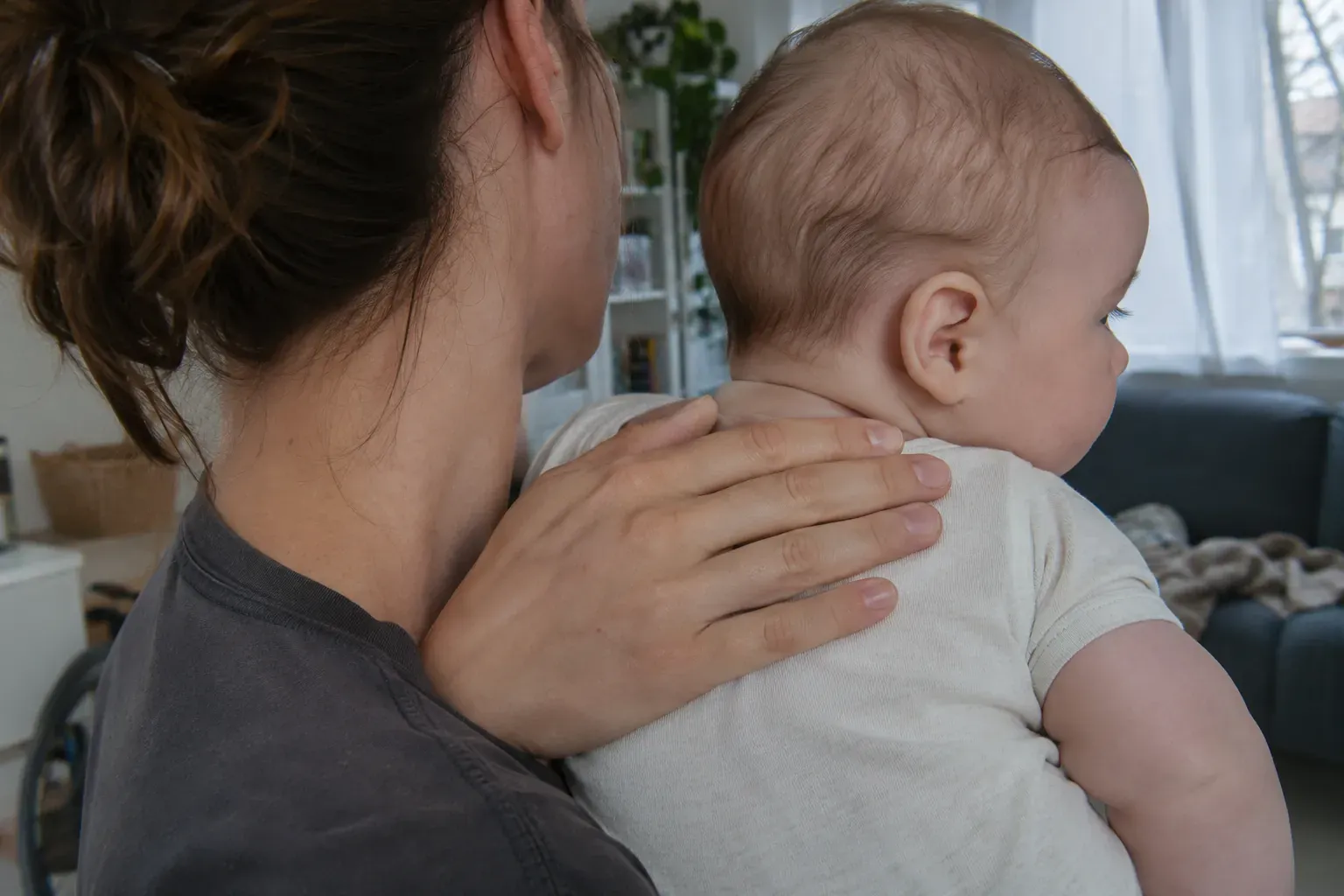
Feel your baby’s chest or the back of their neck. The NHS says not to worry if their hands or feet feel cool, because that’s normal. If their skin feels hot or sweaty, take off one or more layers.
Signs your baby may be too warm include:
- sweating
- a hot chest
- flushed skin or cheeks
- damp hair
- heat rash
- rapid breathing
The AAP lists sweating, a hot chest and flushed skin. Its swaddling guidance adds damp hair, heat rash and rapid breathing.
Should my baby wear a hat to sleep?
Not indoors. The AAP says not to put a hat on your baby indoors once you’re home from the hospital. NICHD advises keeping your baby’s head and face uncovered during sleep. The NHS says to take off hats and extra clothing as soon as you come indoors or get into a warm car, bus or train, even if it wakes your baby.
Is swaddling safe, and when should I stop?
Swaddling can help some newborns settle, but the AAP says it doesn’t reduce the risk of SIDS, and it can raise the risk of overheating. If you swaddle:
- Always place your swaddled baby on their back.
- Leave room for at least two or three fingers between your baby’s chest and the swaddle, and leave the hips loose enough to bend.
- Stop as soon as your baby shows any sign of trying to roll over. The AAP says rolling usually starts around 3 to 4 months, but some babies try as early as 2 months.
Once you stop swaddling, a sleep sack that lets your baby move their arms and legs freely can be used for as long as you like.
Are weighted sleep sacks safe?
No. The AAP says weighted blankets, sleepers, swaddles and other weighted objects shouldn’t be used on or near your baby. Its swaddling guidance explains that they put pressure on a baby’s chest and lungs. The US Consumer Product Safety Commission (CPSC) also says not to use weighted blankets or weighted swaddles.
Should I bundle up a baby with a fever?
No. The NHS advises not wrapping a child with a high temperature in too many clothes or bedclothes. The AAP also notes that babies can develop heatstroke if overdressed in hot, humid weather.
A fever in a young baby needs a call to the doctor. The AAP defines fever as a rectal temperature of 100.4°F (38°C) or higher. For babies 3 months or younger, it says to call your pediatrician immediately, even if there are no other symptoms.
Does what my baby wears change their sleep?
The guidance above is safety guidance. None of these sources says the right layers will make your baby sleep longer, though a baby who isn’t too warm is one less thing to check at 3 am. If night wakings change after you adjust layers or the room, it can help to note it in a sleep log. Cradle, for instance, lets everyone caring for your baby see the same record of night wakings.
When should I call my pediatrician?
Call your pediatrician if:
- your baby is 3 months or younger and has a temperature of 100.4°F (38°C) or higher
- your baby seems unwell, isn’t feeding well, or is unusually sleepy or hard to wake
- your baby often feels hot or sweaty at night even with light layers
Call 911 if your baby is having trouble breathing, has blue or grey lips, is floppy or won’t wake. If you’re worried, call.
Sources
- Safe Sleep: 9 Ways to Reduce a Baby’s Risk of SIDS and Suffocation (HealthyChildren.org, American Academy of Pediatrics)
- How to Keep Your Sleeping Baby Safe: AAP Policy Explained (HealthyChildren.org, American Academy of Pediatrics)
- Swaddling: Is it Safe for Your Baby? (HealthyChildren.org, American Academy of Pediatrics)
- Ways to Reduce Baby’s Risk (NICHD Safe to Sleep)
- Sudden infant death syndrome (SIDS) (NHS)
- Safe Sleep: Cribs and Infant Products (CPSC)
- Fever and Your Baby (HealthyChildren.org, American Academy of Pediatrics)
- High temperature (fever) in children (NHS)
This article is for general education and is not medical advice. Talk to your pediatrician about your baby's health.