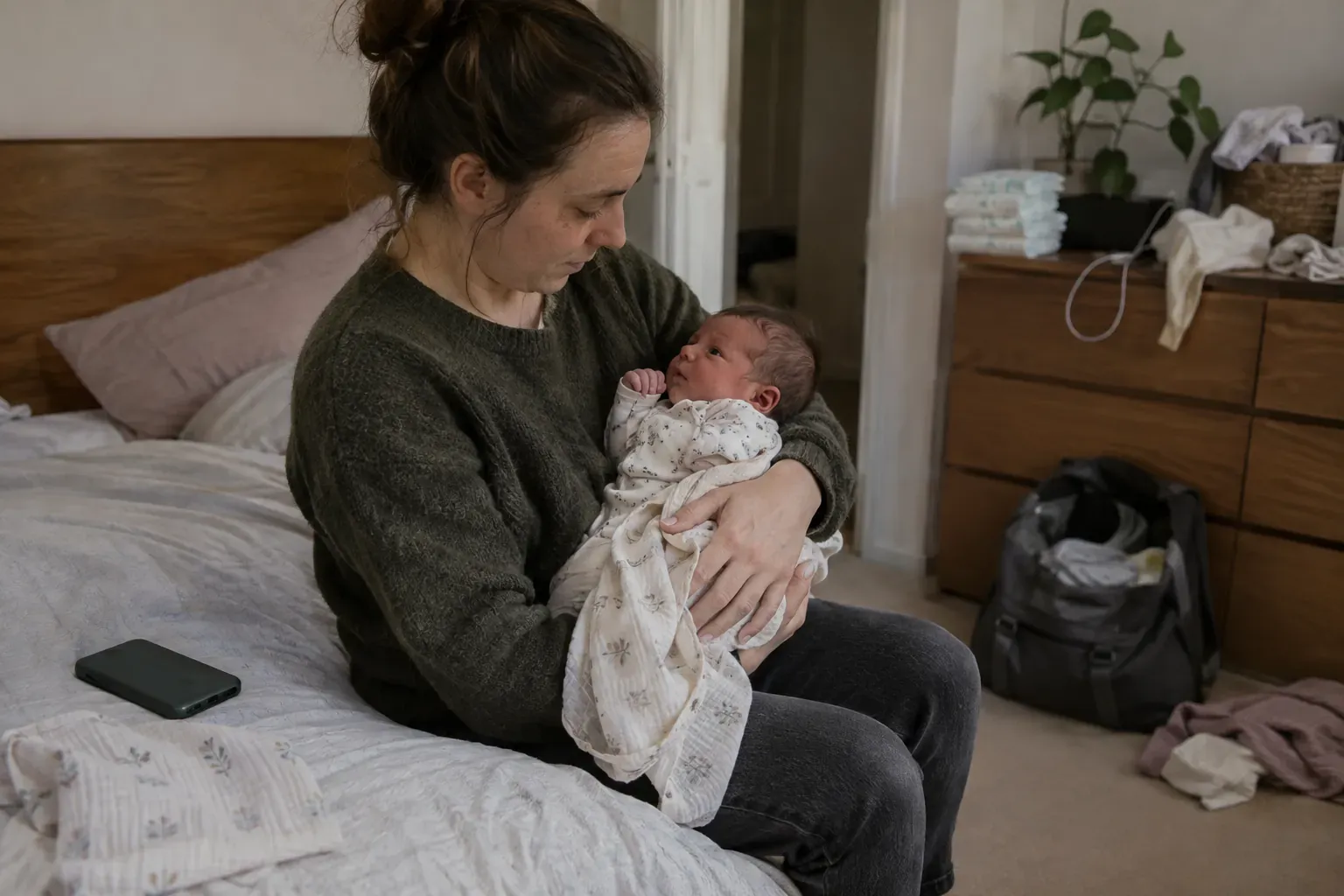
What makes a good bedtime routine for a baby?
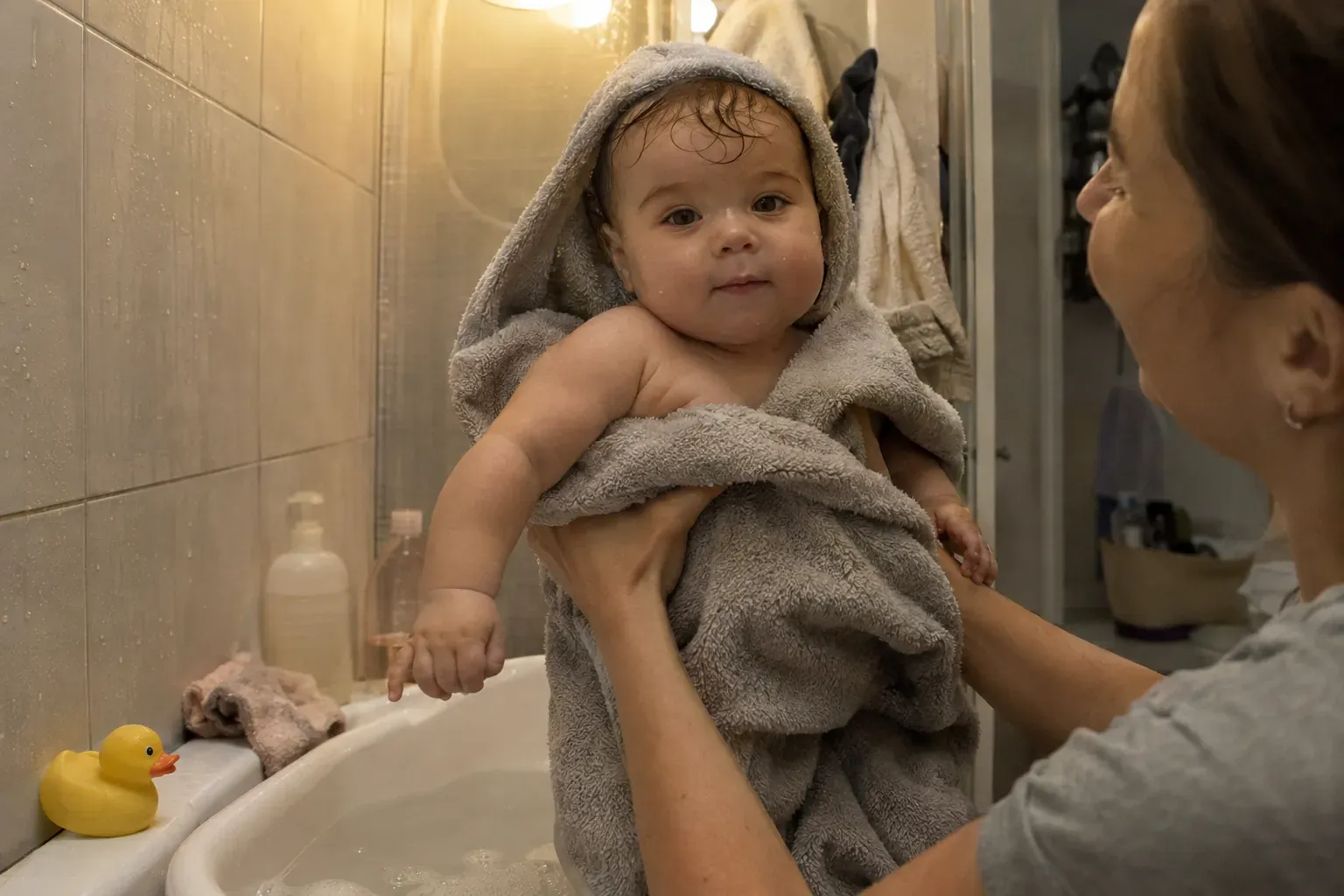
A good bedtime routine for a baby is a short set of calm steps, done in the same order every night, that ends with your baby in their own sleep space, on their back, drowsy but not yet asleep. The steps themselves matter less than the repetition. The American Academy of Pediatrics (AAP) suggests doing the same things each day in the same order at nap time and bedtime, and the NHS lists a bath, a fresh nappy and night clothes, a story, dim lights, a cuddle and a lullaby as things to choose from. Studies led by pediatric sleep researcher Jodi Mindell link a consistent routine with earlier bedtimes, faster settling, fewer night wakings and longer sleep.
What does a bedtime routine look like?
A routine is the predictable set of things you do in the stretch before lights out. Mindell and Williamson’s 2018 review in Sleep Medicine Reviews defines it that way and leaves out rocking or feeding to sleep, which happen while the baby drops off. The review suggests two to four calm activities, such as a feed, a bath or teeth brushing, and a book.
The NHS gives a longer menu: a bath, changing into night clothes and a fresh nappy, dimming the lights, a bedtime story, a goodnight kiss and cuddle, a lullaby, and brushing teeth once there are any. The AAP’s version for older babies and children is three words: brush, book, bed.
A sequence many families settle on:
- A bath or a quick wash
- A fresh diaper and sleep clothes
- A feed
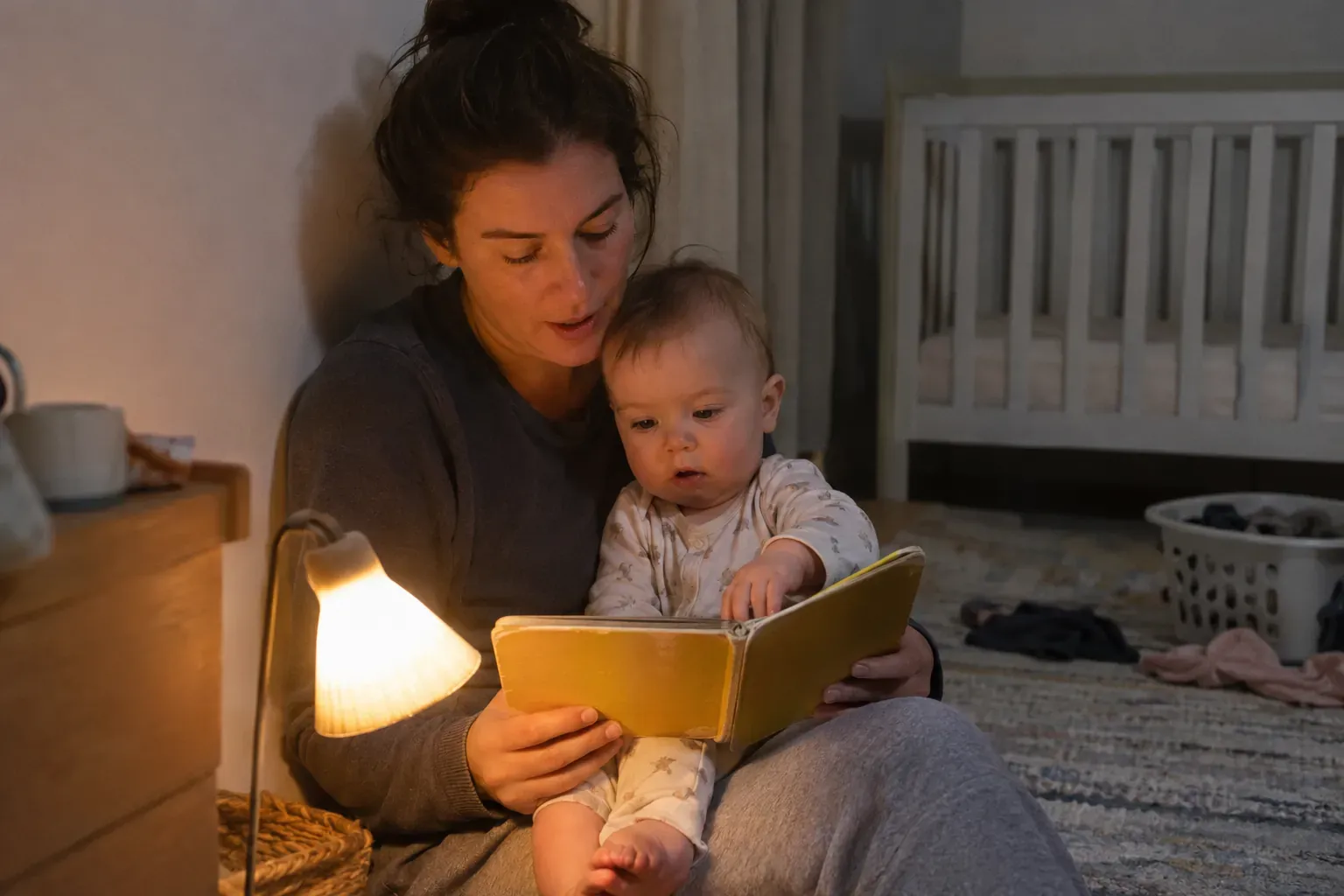
- A short book or a song
- Into the crib drowsy but awake
You don’t need every step. Pick the ones that calm your baby, keep them in the same order, and finish in the same place each night.
When should I start a bedtime routine?
Early, without expecting much of it at first. The AAP’s advice for sleep-deprived new parents is that sticking to sleep routines with a newborn helps both you and your baby relax, and that you should try to do the same things each day in the same order at nap time and bedtime. HealthyChildren.org also says it helps to start early with a routine such as brush, book, bed. The 2018 review recommends that parents hear about bedtime routines during early infancy, because starting early gives the habit time to form.
The NHS doesn’t name an age. It says a simple, soothing routine may help your baby settle, and that keeping to a similar routine as your child gets older is helpful.
Newborns won’t follow a schedule, and they don’t need to. In the first weeks you’re aiming for a wind-down your baby starts to recognise, and the bedtime itself can move around. HealthyChildren.org notes that babies don’t have regular sleep cycles until about 4 months, so early evenings can vary from night to night even with a routine in place.
Does a bedtime routine actually help?
The best evidence comes from Mindell’s work. In a 2009 randomized trial published in Sleep, 405 mothers of babies aged 7 to 18 months and toddlers aged 18 to 36 months were assigned to a routine group or a control group. The routine was a bath, a massage or lotion, and quiet activities such as cuddling or a lullaby, with lights out within 30 minutes of the end of the bath. After two weeks, the routine group showed significant reductions in problematic sleep behaviours, including how long it took to fall asleep and the number and length of night wakings, and the mothers’ mood improved. The control group didn’t change. The trial was funded by Johnson and Johnson.
A 2015 study by the same group looked at 10,085 children from birth to 5 years across 13 countries. A consistent bedtime routine was associated with earlier bedtimes, shorter time to fall asleep, fewer night wakings and longer sleep, and the more nights a week the routine happened, the better the outcomes. That study used parent questionnaires, so it shows an association rather than a cause.
How long should a bedtime routine take?
The AAP and NHS parent pages don’t set a length. The 2018 review suggests a routine last no longer than 30 to 40 minutes, depending on what’s in it. In the 2009 trial, lights out came within 30 minutes of the bath ending.
Where should the routine end?
In a safe sleep space, every night. The AAP’s safe sleep guidance:
- On their back for every sleep, naps included, until 1 year.
- On a firm, flat surface with a fitted sheet and nothing else. No blankets, pillows, bumpers, soft toys or weighted products.
- In your room but not your bed, for at least the first 6 months. The AAP advises against bed sharing under any circumstances.
- No hat indoors, and no overheating.
- A pacifier at nap time and bedtime, once breastfeeding is going well.
If a feed is part of the routine, finish it before the crib. The AAP says not to put babies to bed with a bottle of breast milk, formula, milk, juice or any other sugary drink. And if your baby falls asleep in a car seat, swing or carrier during the wind-down, move them to their crib on their back as soon as you can.
Our posts on the ABCs of safe sleep and how to dress your baby for sleep cover the sleep space and layers in more detail.
Should I put my baby down awake?
From about 4 months, yes. HealthyChildren.org says to put babies to bed when they’re drowsy, not once they’re asleep, because it helps them learn to fall asleep on their own in their own bed. Babies who are rocked or held to sleep may struggle to fall back asleep after waking. Before 4 months, do what works. The NHS notes that in the early weeks many babies only fall asleep in a parent’s arms.
Do screens and lights matter?
Yes. The AAP recommends keeping all screens out of children’s bedrooms and turning them off at least an hour before bedtime to prevent sleep disruption. Its media guidance goes further for the youngest: pediatricians think TV and apps are a bad idea before 18 months at all, and screen use contributes to problems with sleep. The 2018 review lists television and other electronic devices among the things to leave out of a routine.
For light, the NHS suggests dimming the lights to create a calm atmosphere, and keeping nights low-lit and quiet so your baby learns that night is for sleeping. During the day, open the curtains and don’t worry about everyday noise.
What if the routine isn’t working?
Give it time and keep it the same. The 2015 study found the benefit grew with the number of nights a week the routine happened, so a routine done most nights beats a perfect one done twice. Then look at timing. If your baby is wide awake at the end of the routine, or overtired and crying, the start time is usually the thing to change. Watch for sleepy cues and the length of the last awake stretch; our post on wake windows explains how. HealthyChildren.org also notes that putting a child to bed even 15 to 20 minutes earlier can make a big difference.
Logging bedtime and night wakings for a week or two shows whether things are settling. Cradle, for example, keeps bedtime, night wakings and morning wake-ups in one timeline so you can see the pattern, and for eligible babies aged two to under 25 months it also suggests a next nap window from the sleep you log.
When should I call my pediatrician?
A routine helps with settling, but some things shouldn’t wait. Talk to your pediatrician if your baby:
- is very hard to wake, or unusually floppy or drowsy
- is sleeping much more or much less than usual and isn’t feeding well
- has a fever, seems to be in pain, or is breathing in a way that worries you
- has bedtime or night-time problems that are wearing the whole family down and aren’t easing after a few weeks of a steady routine
If something feels wrong, call.
Sources
- Safe Sleep Tips for Sleep-Deprived New Parents (HealthyChildren.org, American Academy of Pediatrics)
- Getting Your Baby to Sleep (HealthyChildren.org, American Academy of Pediatrics)
- Brush, Book, Bed: How to Structure Your Child's Nighttime Routine (HealthyChildren.org, American Academy of Pediatrics)
- Healthy Sleep Habits: How Many Hours Does Your Child Need? (HealthyChildren.org, American Academy of Pediatrics)
- Helping your baby to sleep (NHS)
- A Nightly Bedtime Routine: Impact on Sleep in Young Children and Maternal Mood (Mindell et al., Sleep, 2009)
- Bedtime Routines for Young Children: A Dose-Dependent Association with Sleep Outcomes (Mindell et al., Sleep, 2015)
- Benefits of a bedtime routine in young children: Sleep, development, and beyond (Mindell and Williamson, Sleep Medicine Reviews, 2018)
- How to Keep Your Sleeping Baby Safe: AAP Policy Explained (HealthyChildren.org, American Academy of Pediatrics)
- Safe Sleep: 9 Ways to Reduce a Baby's Risk of SIDS and Suffocation (HealthyChildren.org, American Academy of Pediatrics)
- Why to Avoid TV for Infants and Toddlers (HealthyChildren.org, American Academy of Pediatrics)
This article is for general education and is not medical advice. Talk to your pediatrician about your baby's health.