Is it safe for my baby to nap in the car seat or stroller?
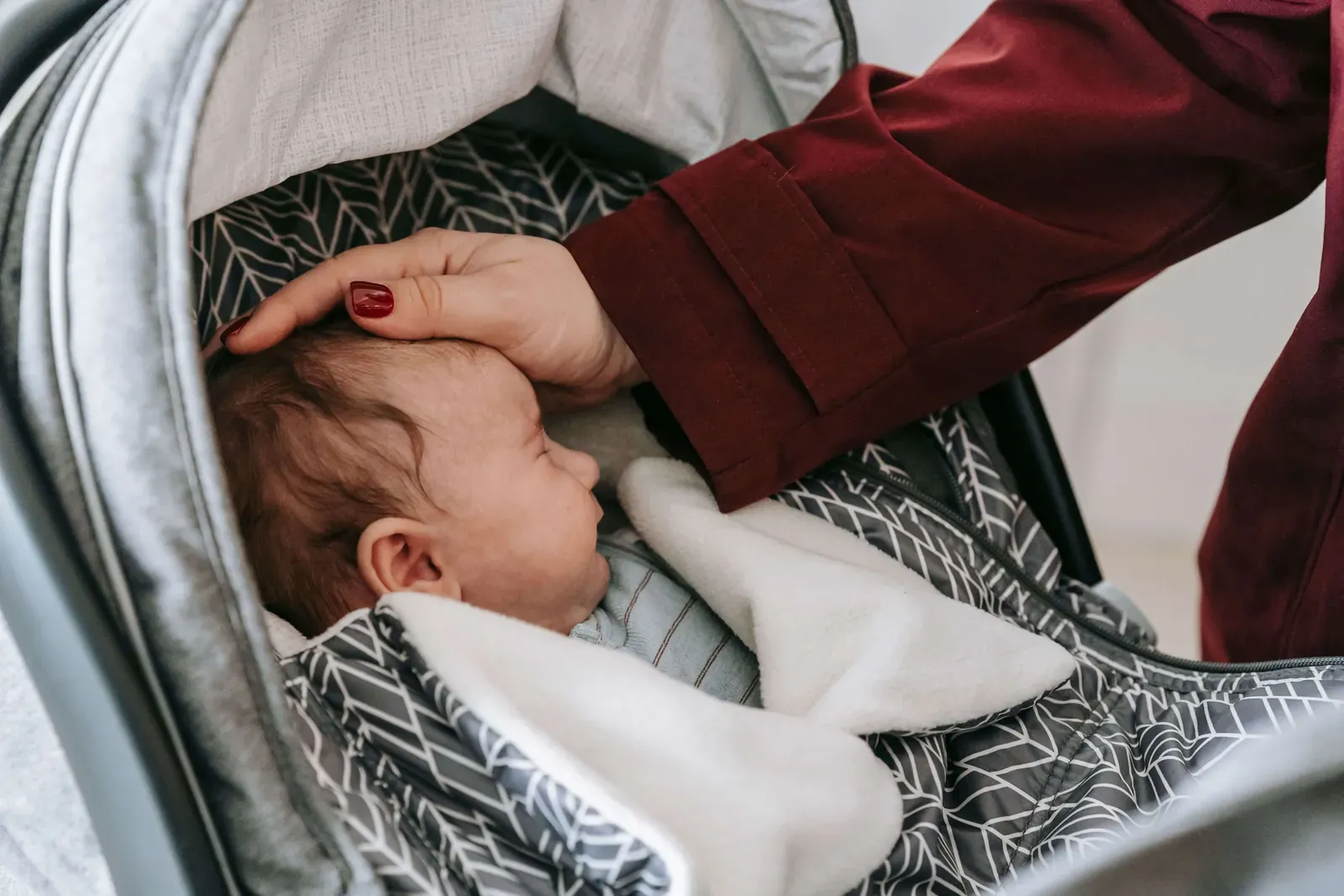
A short doze in a properly fitted car seat while you’re driving is generally safe. Car seats, strollers, swings, bouncers, infant carriers and slings aren’t safe places for routine sleep, though, especially for babies under 4 months. If your baby falls asleep in one, the American Academy of Pediatrics (AAP) says to move them onto their back on a firm, flat sleep surface as soon as you can.
Why aren’t car seats and strollers recommended for sleep?
The concern is position. In a seat or anything tilted, a sleeping baby’s head can tip forward so their chin rests on or near their chest. NICHD’s Safe to Sleep campaign says that position could block a baby’s airway and cause suffocation, which is called positional asphyxia.
Inclined surfaces add another risk: the baby’s body can slide down and the head can slump. The AAP says any surface inclined more than 10 degrees isn’t safe for a baby to sleep on. The US Consumer Product Safety Commission (CPSC) says a seated or semi-reclined position can tip a baby’s head forward and block the airway.
The AAP’s 2022 safe sleep policy statement lists car seats, strollers, swings, infant carriers and slings as sitting devices, and says they’re not recommended for routine sleep at home or in hospital, especially for babies younger than 4 months.
Is it OK if my baby falls asleep in the car?
Yes. The AAP says dozing in a car seat in a moving car is generally safe. The car seat is doing its job there: protecting your baby in a crash.
The problem starts when the trip ends. The AAP says infant car seats “are not made for sleep outside your vehicle”. Once you’ve arrived, take your baby out and move them to a firm, flat surface on their back, even if it means waking them.
A 2019 study in Pediatrics looked at 11,779 sleep-related infant deaths in the US between 2004 and 2014. Of these, 348 (3%) happened in sitting devices, and about 63% of those were in car seats. Car seats were used as directed in fewer than 10% of those cases, and just over half of the car seat deaths happened at the child’s home. The authors concluded that using car seats for sleep outside of travel may put babies at risk.
What about naps in the stroller?
The same advice applies. A stroller seat, like a car seat, holds your baby upright or reclined, and the AAP and NICHD both say strollers aren’t recommended as a regular nap space. NICHD advises moving your baby to their regular sleep space as soon as possible if they fall asleep, and giving them breaks from sitting devices every few hours.
If your baby nods off on a walk, stay where you can see them, check their head isn’t slumped forward, and transfer them once you’re home.
Are swings, bouncers and rockers safe for naps?
No. The AAP says swings, rockers, bouncers and gliders are for play, not sleep. They hold babies upright or inclined, so a sleeping baby’s head can fall forward or to the side and make breathing hard or impossible. If your baby falls asleep in one, move them.
The AAP also advises against products for sleep that aren’t specifically marketed for infant sleep, such as nursing pillows and baby loungers, and against any product that doesn’t meet federal safety standards. For sleep, the CPSC points to cribs, bassinets, play yards and bedside sleepers that meet federal requirements.
Can my baby nap in a sling or carrier?
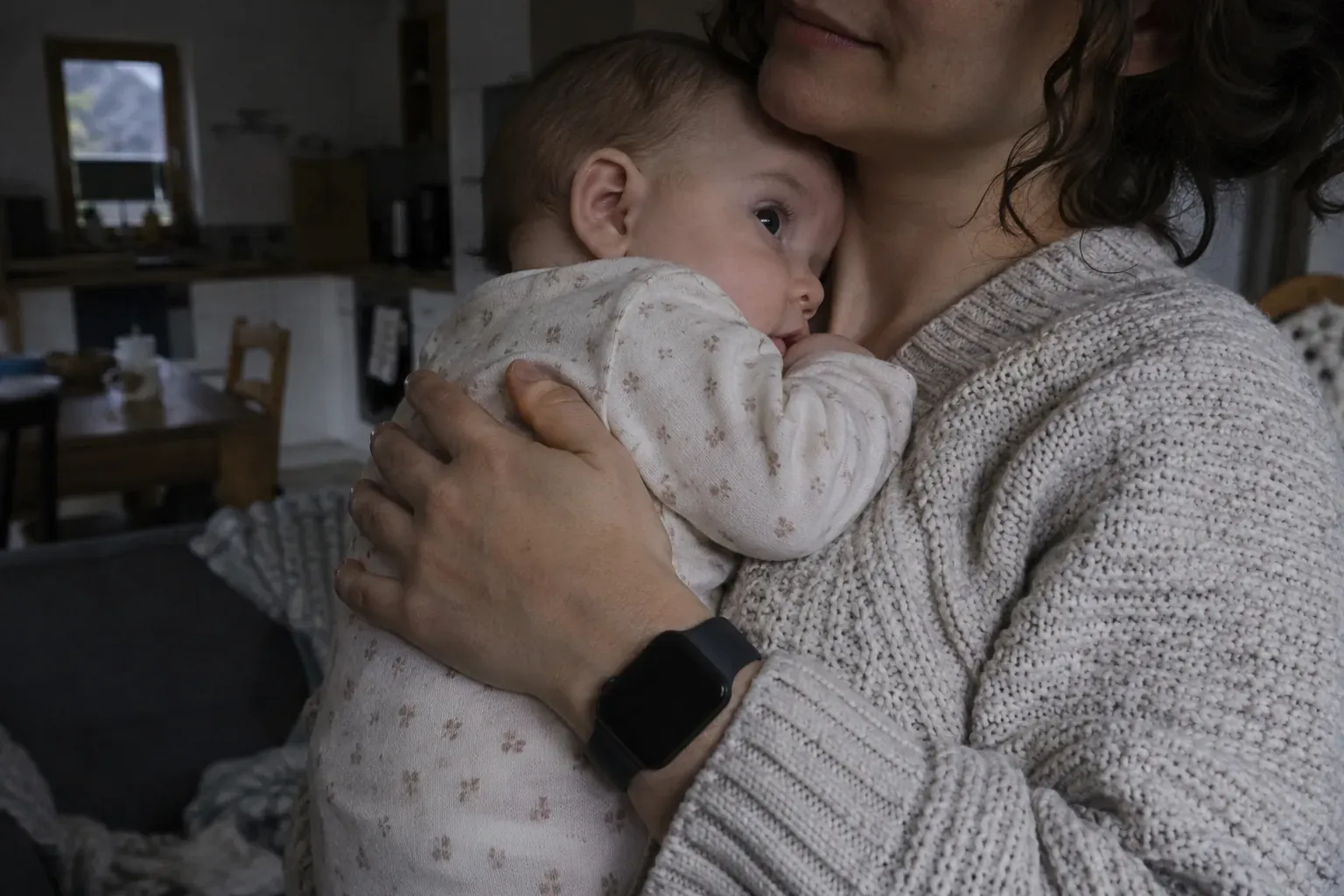
Carriers are a sitting device too, so the AAP says they aren’t for routine sleep. Babies do fall asleep in them, so it helps to know the safe position. The AAP’s carrier guidance and the CPSC warn of a suffocation hazard in sling carriers, particularly for babies younger than 4 months. To keep your baby’s airway clear:
- Keep your baby’s face visible, with their head up and above the fabric.
- Keep their nose and mouth uncovered.
- Keep their chin off their chest. A curled C-shape greatly increases the risk of breathing problems.
- Check on them often.
The AAP says babies born early or with breathing problems shouldn’t be placed in upright carriers. Ask your pediatrician first.
How do I move a sleeping baby without waking them?
You can’t always, and that’s fine. The safety advice doesn’t change if they wake. Some things parents find help:
- Unbuckle and lift slowly, supporting the head and neck.
- Have the crib or bassinet ready before you lift: firm and flat, with nothing else in it.
- Lay your baby on their back. The AAP recommends the back for every sleep, including naps.
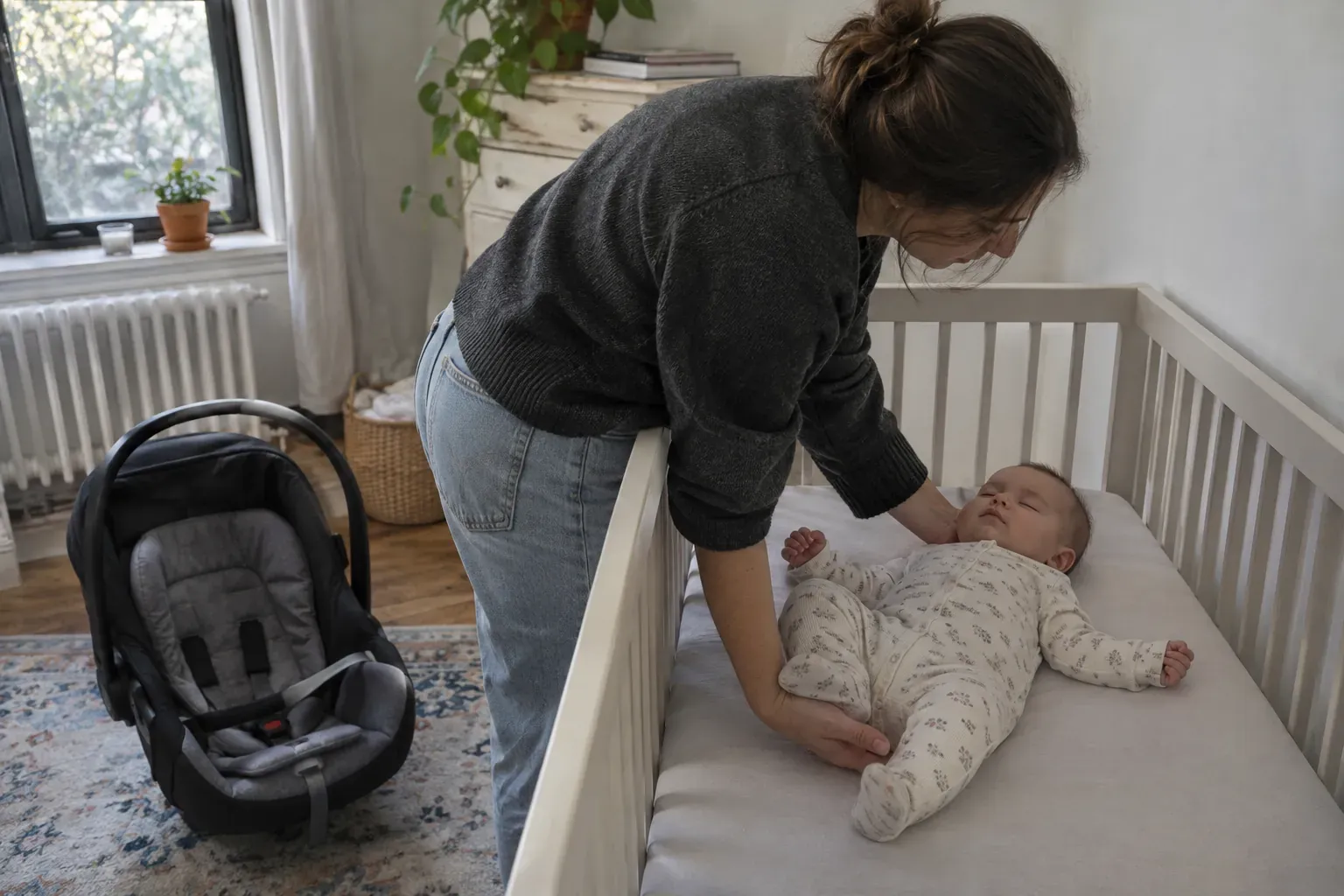
If on-the-go naps are a regular part of your week, it can help to look at when they happen. A shared log of naps, kept by everyone who cares for your baby, shows whether car rides keep landing on nap time. Our post on the ABCs of safe sleep covers the full setup for naps at home.
Does this matter at daycare or with a babysitter?
Yes. In the 2019 study, the odds of a sitting-device death were higher when a child care provider (about 2.8 times) or babysitter (about 2 times) was in charge than when a parent was. Make sure anyone who cares for your baby knows to move them to a firm, flat surface if they fall asleep in a seat, swing or carrier.
When should I call my pediatrician?
Call 911 straight away if your baby is having trouble breathing, has blue or grey lips, is floppy or won’t wake. The NHS gives the same list as reasons to call emergency services. Talk to your pediatrician if your baby was born early or has a breathing or medical condition and you’re unsure about car seats, carriers or travel, or if your baby only seems to sleep upright.
Sources
- How to Keep Your Sleeping Baby Safe: AAP Policy Explained (HealthyChildren.org, American Academy of Pediatrics)
- Baby Products to Avoid (HealthyChildren.org, American Academy of Pediatrics)
- Safe Sleep: Back is Best, Avoid Soft Bedding, Inclined Surfaces and Bed Sharing (HealthyChildren.org, American Academy of Pediatrics)
- Sleep-Related Infant Deaths: Updated 2022 Recommendations (Pediatrics, American Academy of Pediatrics)
- Ways to Reduce Baby’s Risk (NICHD Safe to Sleep)
- Safe Sleep Environment for Baby (NICHD Safe to Sleep)
- Infant Deaths in Sitting Devices (Liaw et al., Pediatrics, 2019)
- Baby Carriers: Backpacks, Front Packs and Slings (HealthyChildren.org, American Academy of Pediatrics)
- Sudden infant death syndrome (SIDS) (NHS)
- Safe Sleep: Cribs and Infant Products (CPSC)
This article is for general education and is not medical advice. Talk to your pediatrician about your baby's health.