How can new parents cope with sleep deprivation?
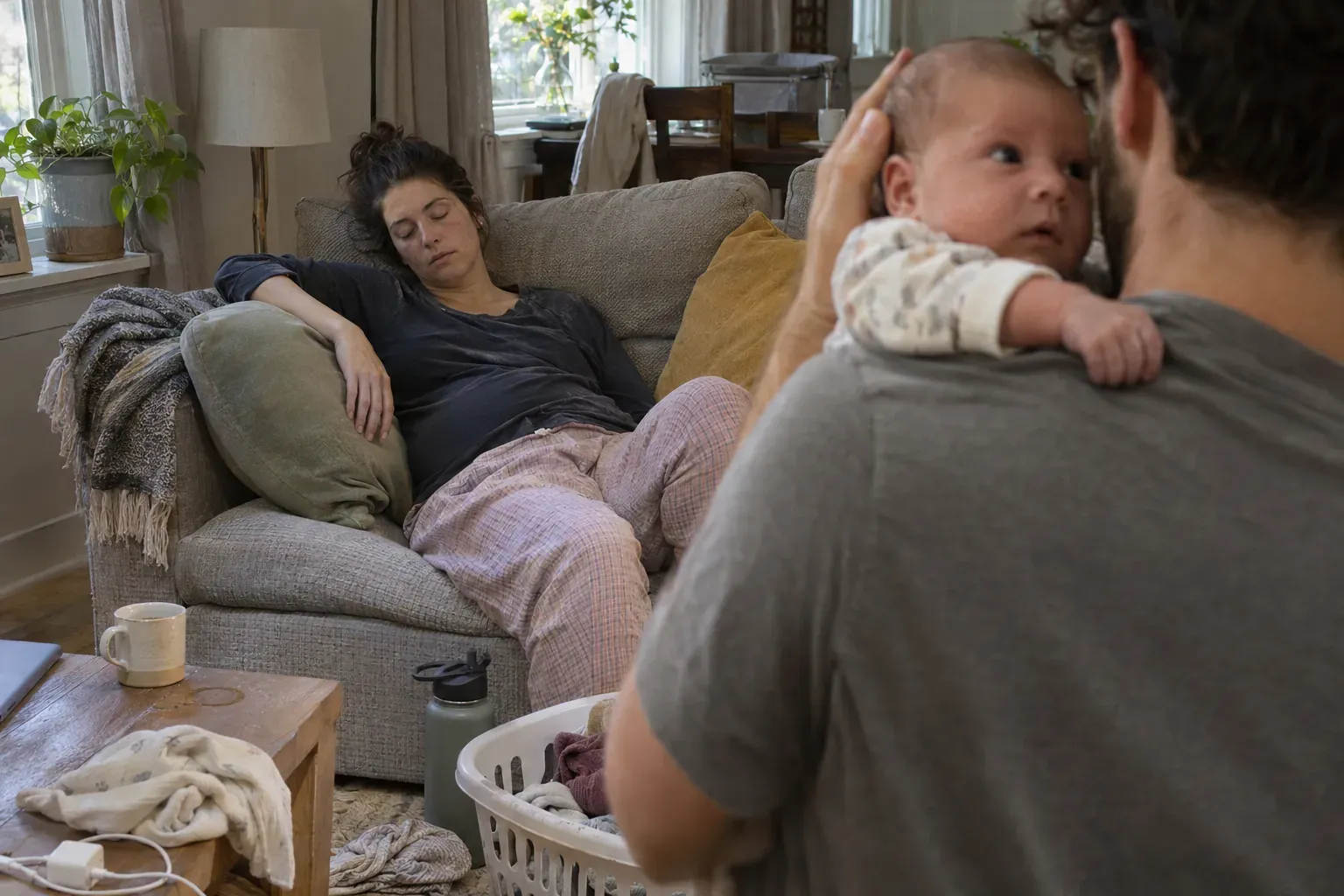
Almost every new parent loses sleep, and the most useful things are simple: rest whenever your baby sleeps, go to bed soon after the last evening feed, share the nights with a partner or someone you trust, and accept help. The NHS and the American Academy of Pediatrics (AAP) both start there. Just as important is staying safe while you’re exhausted: never fall asleep holding your baby on a sofa or armchair, don’t drive when you’re drowsy, and talk to a doctor if the tiredness comes with low mood or hopelessness, because that can be a sign of postnatal depression.
How much sleep do new parents really lose?
A lot, at first. A large German study that followed parents through yearly interviews found that sleep reached its lowest point in the first 3 months after a birth. Compared with before pregnancy, mothers reported about 62 minutes less sleep a night and fathers about 13 minutes less. Sleep satisfaction fell too, most of all for mothers. The same study found that sleep hadn’t fully returned to pre-pregnancy levels up to 6 years after a first child.
The newborn months don’t last forever: the NHS notes that frequent night waking eases as babies grow and sleep in longer stretches. Our post on how often newborns wake at night covers what’s normal at each stage. If you feel worn out, you’re not failing. Losing sleep comes with caring for a baby who needs feeding around the clock.
How can I get more rest with a newborn?
Take rest wherever the day allows it. The advice from the AAP and the NHS overlaps:
- Rest when your baby sleeps. The AAP suggests napping, or at least resting with your phone off, when your baby naps. The NHS suggests setting an alarm if you’re worried about sleeping too long.
- Go to bed early. The AAP suggests going to bed right after your baby’s last feed of the day.
- Keep night feeds boring. The AAP suggests dim lights and a calm, unstimulating room at night.
- Move a little. The NHS says regular exercise can help you feel less tired, and a walk with your baby, even to the shops, counts.
You won’t get a full night this way, but small pieces of rest add up.
How can a partner or family help with the nights?
Share the work so each adult gets a protected stretch of sleep. The NHS suggests asking your partner to help. If you’re formula feeding, a partner can share the feeds. If you’re breastfeeding, they can take over nappies and dressing in the morning, and later give the occasional bottle of expressed breast milk at night.
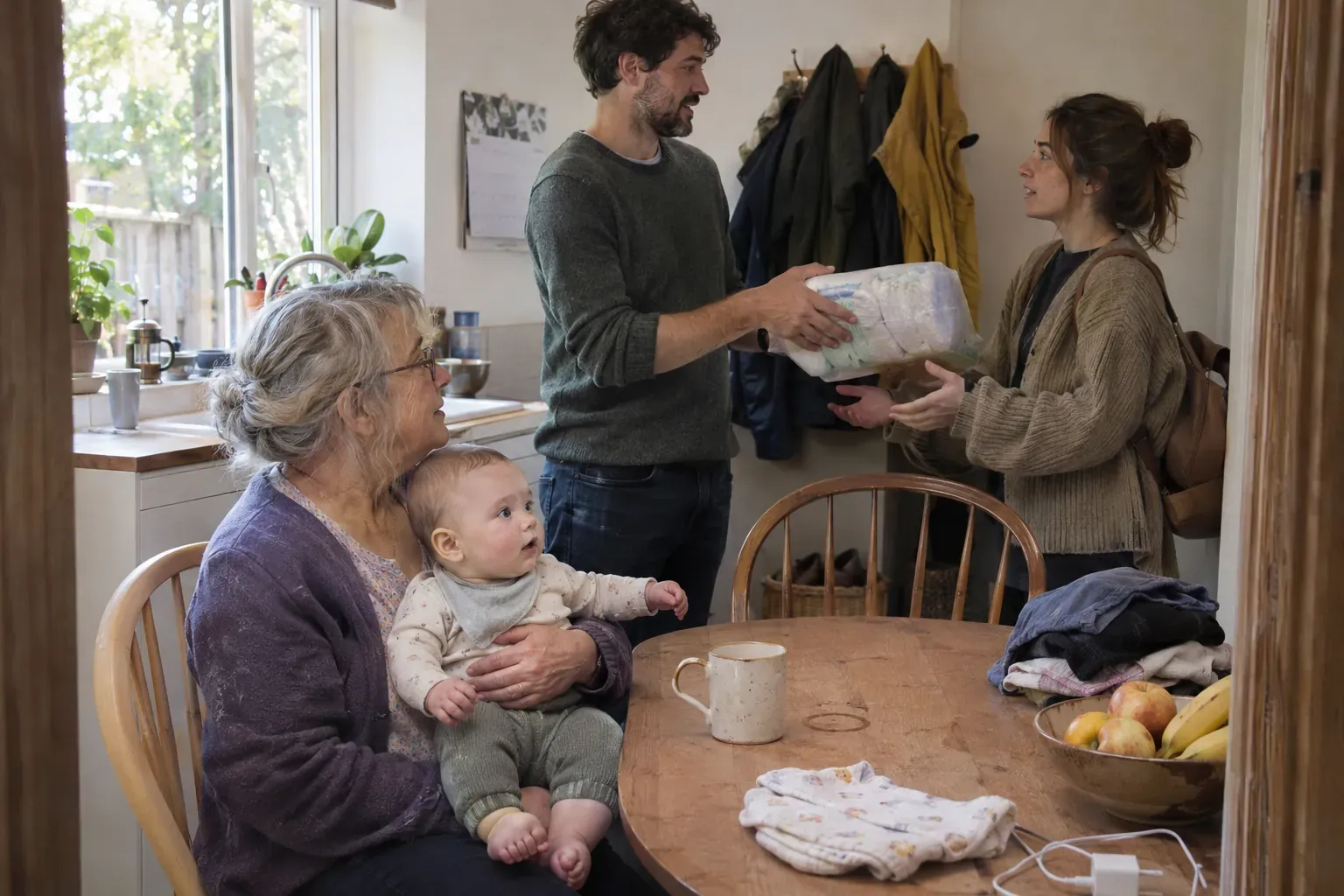
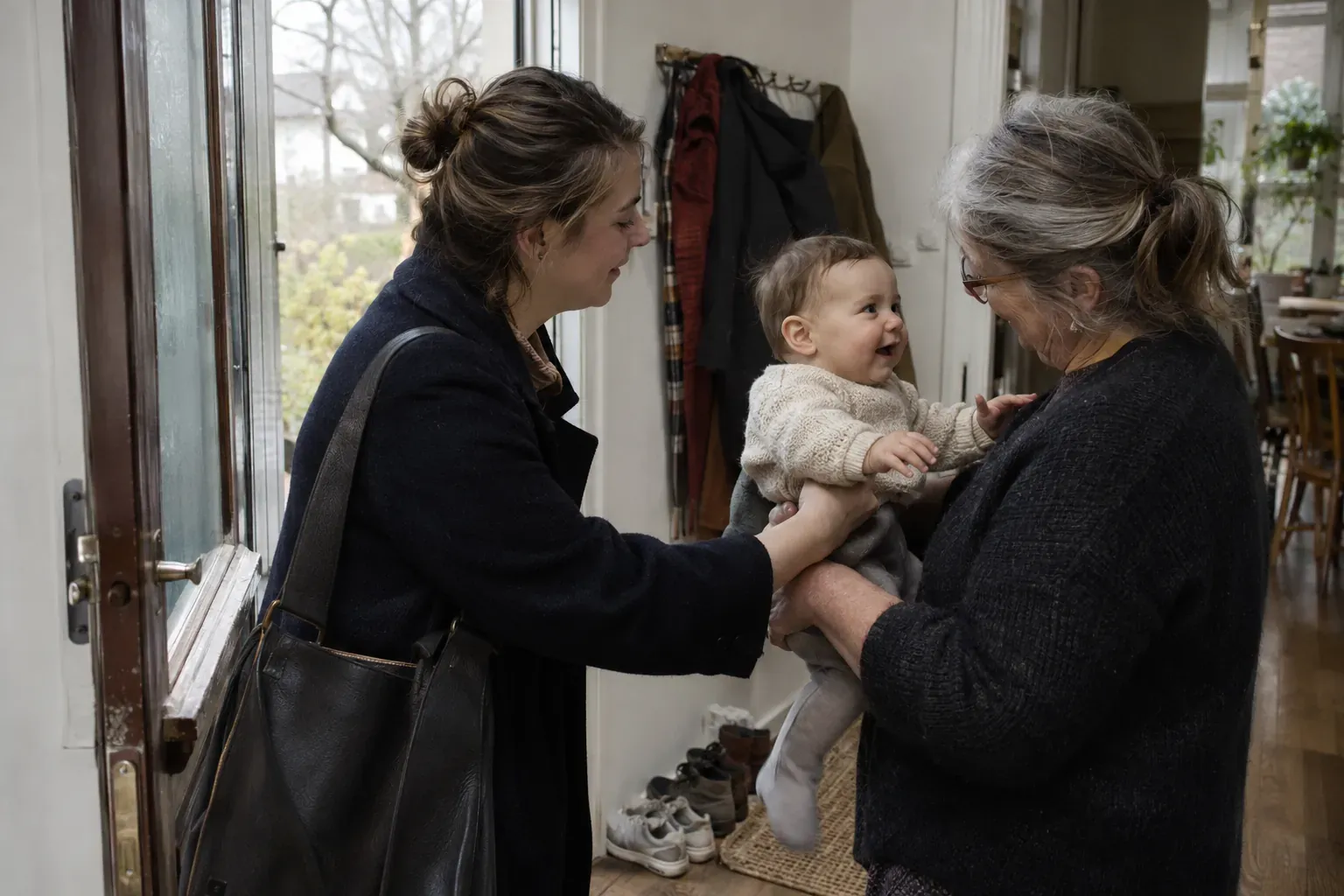
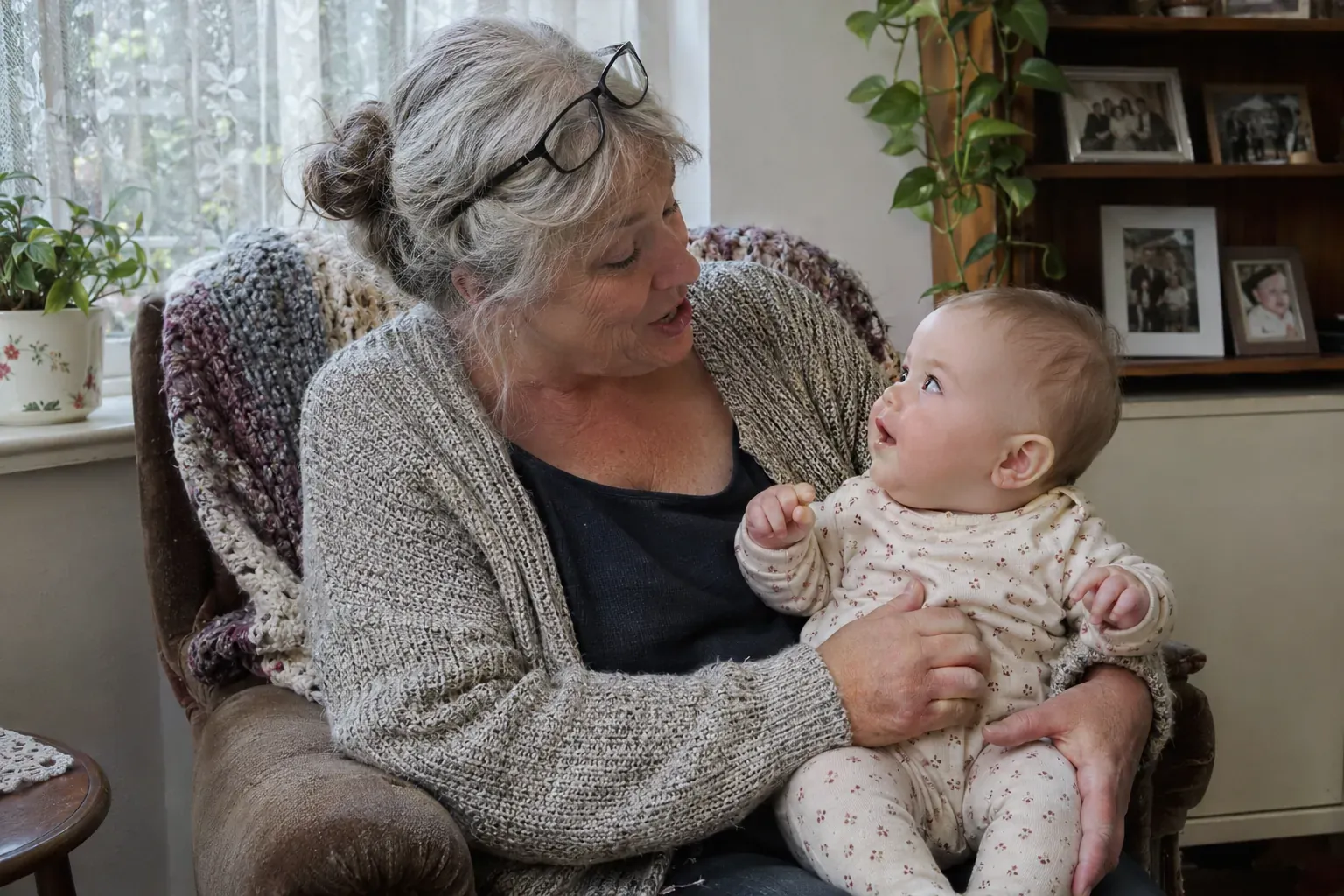
If you’re on your own, the NHS suggests asking friends or relatives to watch the baby while you nap, or to stay for a few days. The AAP suggests asking a trusted friend, family member or experienced parent to step in, and going through your safe sleep routine with them first. Our safe sleep advice for grandparents is a good thing to share before anyone helps.
Taking turns works better when the person coming on duty knows what already happened. A written log, or a shared app such as Cradle: Baby Sleep Tracker by Zorest, saves the “when did she last eat?” conversation at 3am. Our post on handing over to the next caregiver has a simple checklist.
How do I stay safe when I’m exhausted?
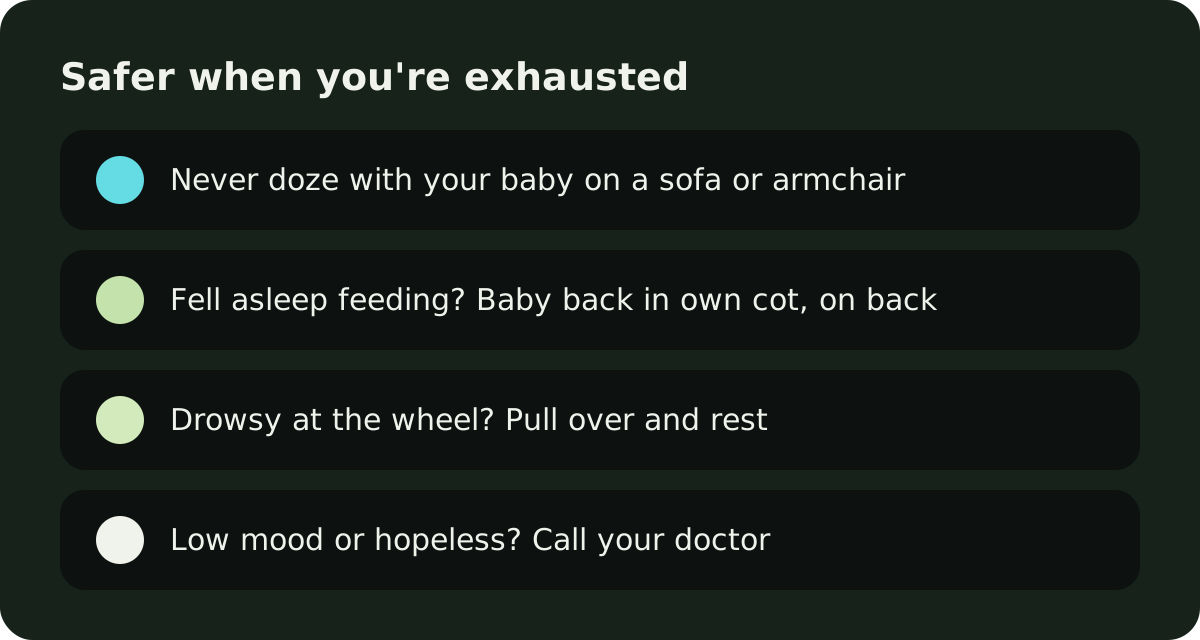
One risk the AAP singles out is falling asleep without meaning to while holding your baby. It is clear: never put your baby to sleep on an armchair or sofa, and make sure you don’t fall asleep on an armchair or sofa while holding your baby.
For night feeds, the AAP’s tips for sleep-deprived parents are:
- Avoid feeding your baby on a couch or armchair.
- Remove items and bedding from the area where you feed.
- Ask someone to stay with you while you breastfeed, if you can.
- Help yourself stay awake: a light snack, water if you’re breastfeeding, frequent phone alarms, and a podcast or audiobook that won’t make you drowsier.
- If you do fall asleep while feeding, put your baby on their back in their own bassinet or crib as soon as you wake up.
The AAP recommends that your baby sleeps in your room but not in your bed, for at least the first 6 months and ideally up to a year. Our ABCs of safe sleep covers the full setup.
Is it safe to drive when I’m this tired?
Drowsy driving is a real risk. In a CDC survey of more than 147,000 adults in 19 US states and the District of Columbia, 4.2% said they had fallen asleep while driving at least once in the previous 30 days. People who usually slept 6 hours or less were more likely to report it (6.7%) than people who slept 7 to 9 hours (2.6%).
The CDC report says turning up the radio or opening a window hasn’t been shown to keep drivers alert. If you feel drowsy at the wheel, the safe option is to get off the road and rest until you’re no longer drowsy. In the newborn weeks it’s worth planning ahead: let a rested adult drive, or put off trips that can wait.
Is it just tiredness, or could it be postnatal depression?
The two can overlap. The NHS says to watch for trouble sleeping even when your baby is asleep, feeling tired all the time, feeling down or hopeless, and losing interest in things you usually enjoy. These can be signs of postnatal depression.
The “baby blues”, feeling low or tearful for a few days after the birth, usually pass within 2 weeks. Postnatal depression can start during pregnancy, soon after birth, or any time up to a year after, and the NHS notes that fathers and partners can have it too. The AAP says that if you’re always feeling really sad, anxious or hopeless and it’s hard to get through the day, those may be signs of postpartum depression, and you shouldn’t go through it alone.
When should I call a doctor or my pediatrician?
Talk to your own doctor, midwife or health visitor as soon as possible if:
- You feel very tired or are struggling to cope.
- You think you might be depressed, or low mood or anxiety lasts beyond the first 2 weeks.
- You can’t sleep even when your baby is sleeping.
The AAP notes that you can also raise it with your pediatrician at your baby’s visit or by calling their office. Your pediatrician can help you find support. In the US you can call or text the National Maternal Mental Health Hotline at 1-833-TLC-MAMA (1-833-852-6262). In the UK you can call Samaritans on 116 123.
Get medical care immediately if you have thoughts of harming yourself or your baby, or overwhelming tiredness that sleep doesn’t relieve. The CDC lists both as urgent warning signs at any point up to a year after giving birth. If you or your baby are in danger, call 911 in the US or 999 in the UK.
Sources
- Safe Sleep Tips for Sleep-Deprived New Parents (HealthyChildren.org, American Academy of Pediatrics)
- Safe Sleep: 9 Ways to Reduce a Baby's Risk of SIDS and Suffocation (HealthyChildren.org, American Academy of Pediatrics)
- Is it normal to feel completely overwhelmed after having a baby? (HealthyChildren.org, American Academy of Pediatrics)
- Sleep and tiredness after having a baby (NHS)
- Postnatal depression (NHS)
- Urgent Maternal Warning Signs (CDC)
- Drowsy Driving: 19 States and the District of Columbia, 2009–2010 (CDC, Morbidity and Mortality Weekly Report)
- Long-term effects of pregnancy and childbirth on sleep satisfaction and duration of first-time and experienced mothers and fathers (Richter et al., Sleep, 2019)
This article is for general education and is not medical advice. Talk to your pediatrician about your baby's health.