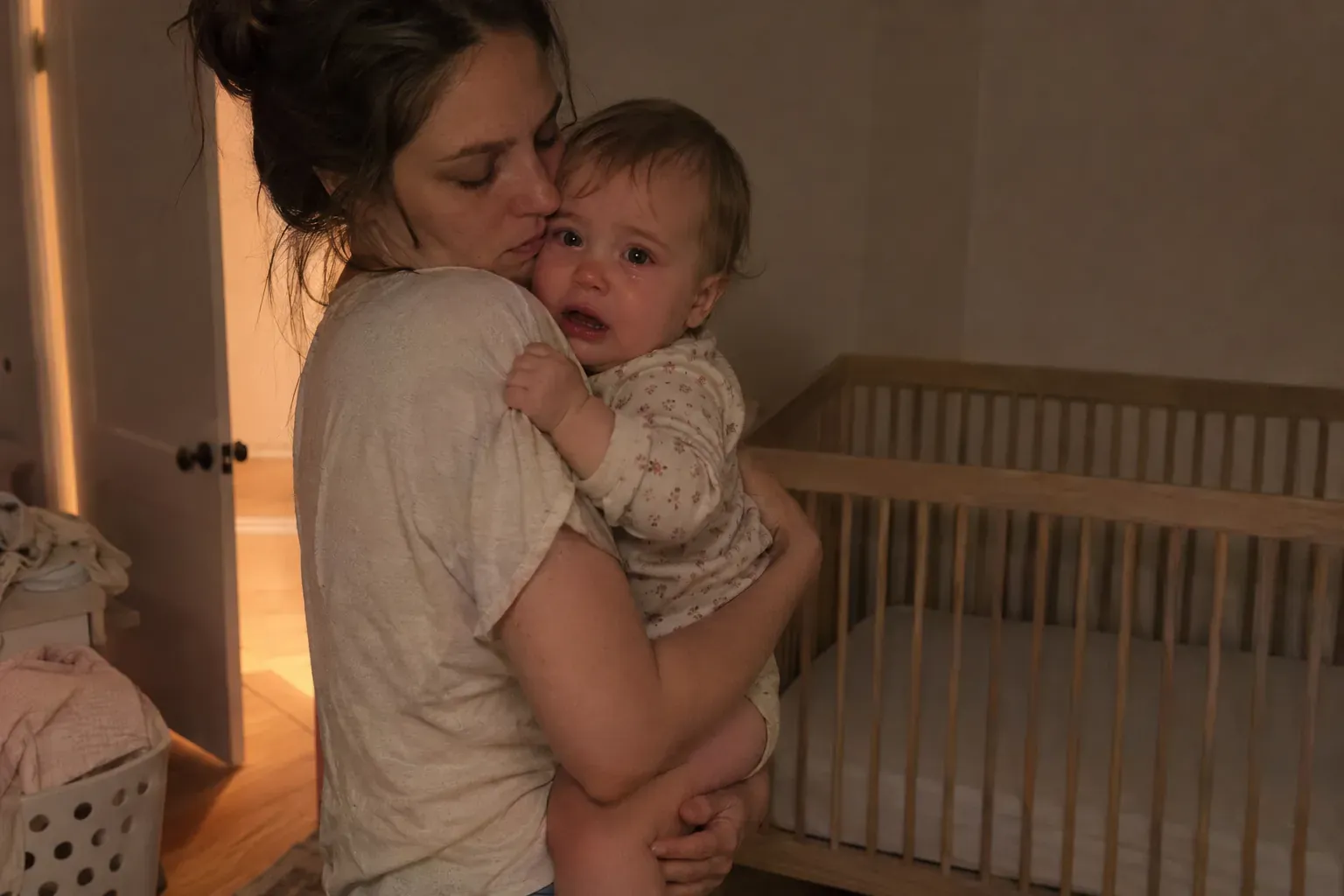
What is the 4-month sleep regression?
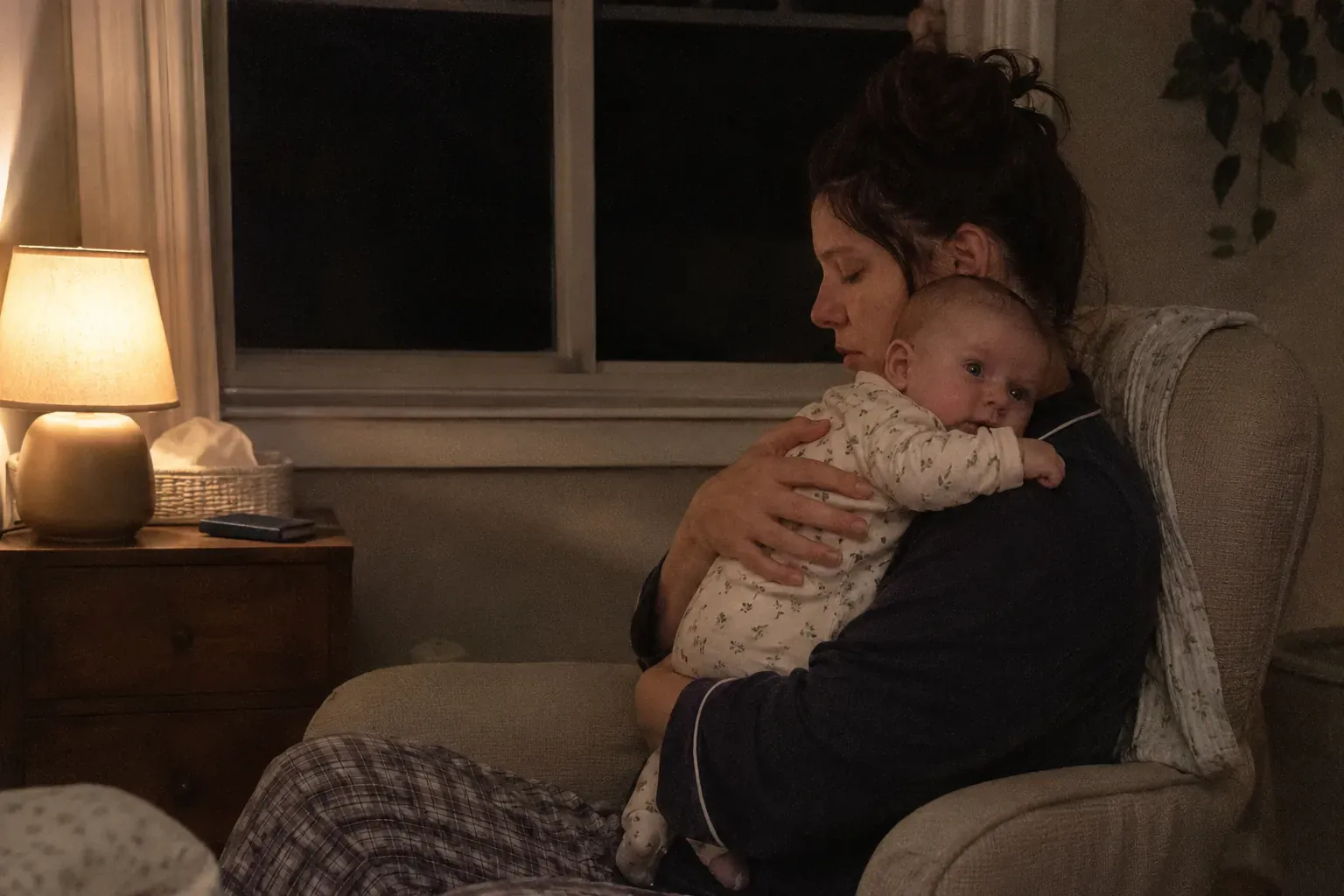
The “4-month sleep regression” is a term parents use, and you won’t find it in any medical guideline. It describes a stretch, usually between 3 and 5 months, when a baby who had started sleeping in longer pieces begins waking more at night, taking shorter naps, or fighting sleep. The American Academy of Pediatrics (AAP) doesn’t use the phrase, but its parent site does say that babies don’t have regular sleep cycles until about 4 months of age. What parents notice is usually sleep maturing.
What do parents mean by a sleep regression?
Parents and sleep coaches use “regression” for any phase when sleep gets worse after it had been getting better. The 4-month version is the best known: more night wakings, shorter naps, a baby who is harder to settle than two weeks ago.
There’s no AAP or NHS page about sleep regressions. We looked. The closest thing on HealthyChildren.org, the AAP’s parent site, is an article by pediatrician Rachel Moon, which says that infant sleep patterns change frequently and that night waking phases come and go in the first few years, often without any explanation. So “regression” is a label parents gave to something real; there is no clinical definition behind it.
What happens to a baby’s sleep around 4 months?
HealthyChildren.org says: “Babies do not have regular sleep cycles until about 4 months of age.” Newborn sleep is split roughly equally between REM (active) sleep and non-REM (quiet) sleep.
Research fills in the detail. A 2023 review in the journal Sleep describes newborns sleeping 15 to 17 hours spread across the whole 24-hour day with no overt rhythms at first, and says that around 5 months sleep becomes more consolidated, with the longest night stretch around 6 hours. A 2025 scoping review found that consistent day and night patterns typically develop between 3 and 6 months. A nursing review gives an average sleep cycle of 47 minutes in healthy term newborns and 50 minutes at 12 and 24 weeks.
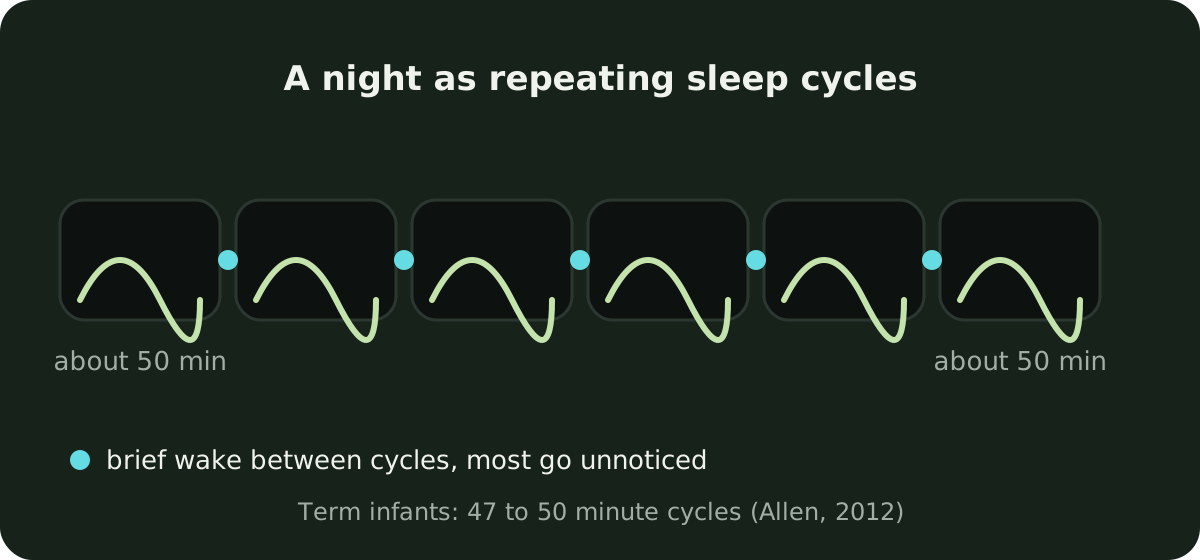
So at around 4 months your baby’s sleep is reorganizing into longer night stretches and a day-night pattern. The popular explanation for the “regression” is that as sleep becomes more structured, babies wake more fully between cycles and need help getting back down. The pieces of that story are in the research, but we couldn’t find a study that tests the 4-month regression itself, so treat it as an explanation that fits, with no study behind it yet.
Why is waking between sleep cycles normal?
Because every baby does it. In a study that video-recorded 80 babies sleeping at home at 3, 6, 9 and 12 months, most woke during the night at every age, and the authors note that babies under 12 months typically arouse an average of three times a night. At 3 months, only about 17 percent of those babies put themselves back to sleep without help; by 6 months it was about 62 percent. Truly sleeping through the night happened on only a few nights.
HealthyChildren.org says the same in plainer words: a good sleeper is a child who wakes up frequently but can get himself back to sleep, not a child who sleeps without waking for 10 hours. Frequent waking is developmentally appropriate, and sleeping undisturbed for prolonged periods at this age is not healthy.
What helps during the 4-month sleep regression?
None of the sources promise a fix. They do agree on habits that help babies learn to fall asleep, and fall back asleep, on their own.
- Put your baby down drowsy but awake. The AAP’s advice is “Put babies to bed when they are drowsy. Do not wait until babies are asleep.” Dr. Moon suggests the same after a night waking.
- Give them a moment. HealthyChildren.org says not to rush in to soothe a crying baby, because babies need time to put themselves back to sleep; you can of course feed, change or comfort them when they need it. Responding to their signals will not spoil them.
- Keep nights boring. “Try not to stimulate or wake babies when you feed or change them during the night. If you speak, speak softly.” The AAP also says more awake time by day helps babies sleep for longer periods at night.
- Keep a simple, consistent routine. The NHS says a simple, soothing bedtime routine may help a baby settle: a bath, night clothes and a fresh nappy, a story, dimmed lights and a goodnight cuddle. HealthyChildren.org says all children thrive on a regular bedtime routine.
- Go by sleepy cues; the clock is only a rough guide. Our post on wake windows covers the cues.
- Keep the baby’s sleep space in your room. The AAP recommends room-sharing without bed-sharing for at least the first 6 months, and preferably up to a year.
What should I avoid when my baby stops sleeping?
The AAP’s safe sleep rules don’t relax at 4 months, and this is the age when a few of them matter most. Our post on the ABCs of safe sleep has the full list; these are the ones that come up during a regression.
- No new sleep props. Pillows, positioners, loungers and soft bedding increase the risk of entrapment, suffocation and strangulation, and the AAP says not to use weighted blankets, sleepers or swaddles on or near a baby.
- No inclined sleepers. The AAP says any surface that inclines more than 10 degrees isn’t safe for sleep.
- No bed-sharing, and no dozing off on the sofa. The AAP recommends avoiding bed-sharing under any circumstances, and says the risk of sleep-related death is up to 67 times higher when a baby sleeps with someone on a couch. If you bring your baby into bed to feed, put them back in their own sleep space before you go to sleep.
- No routine sleep in swings, car seats or carriers. If your baby falls asleep in one, move them to a firm, flat surface on their back as soon as possible.
- Stop swaddling at the first sign of rolling. Some babies start working on rolling as early as 2 months, and swaddling once a baby can roll onto their stomach is linked to a higher risk of SIDS and suffocation.
- Don’t start solids to buy sleep. HealthyChildren.org says it won’t help your baby sleep through the night.
How long does the 4-month sleep regression last?
We can’t give you a number, because none of the sources we read give one. HealthyChildren.org says only that night waking phases come and go. The research describes the months around it: in parent diaries, night wakings fall from about 3 to about 2 per night between birth and 16 weeks, then change little up to 24 weeks, while the longest sleep stretch starts lengthening after about 10 weeks. The AAP’s preemie page notes that a term baby might sleep a full 6 to 8 hours at night by 4 months, and a preterm baby may not until 6 to 8 months or later. Any “two to six weeks” figure you see online is someone’s rule of thumb.
Logging sleep for a week or two makes the pattern easier to see than memory does. Cradle: Baby Sleep Tracker by Zorest, for example, logs night wakings alongside naps and suggests a next nap window for eligible babies aged two to under 25 months; a window is a time to offer a nap and never a guarantee.
When should I call my pediatrician?
More waking at 4 months is usually just more waking. HealthyChildren.org says to check with your pediatrician about night waking if your baby is not growing and gaining weight steadily, not feeding well (8 to 12 times a day if breastfeeding, 5 to 8 times a day if bottle-fed), or not producing at least 4 wet diapers a day. Dr. Moon adds that a sleep change may be healthy development, or your child may need screening for other issues that affect sleep.
Get help right away if your baby is difficult to wake or floppy, is breathing very fast, grunting or struggling to breathe, or isn’t feeding. For a baby 3 months or younger, a rectal temperature of 100.4 degrees Fahrenheit (38 degrees Celsius) means calling your pediatrician immediately, even with no other symptoms.
Sources
- Getting Your Baby to Sleep (HealthyChildren.org, American Academy of Pediatrics)
- Sleeping Through the Night (HealthyChildren.org, American Academy of Pediatrics)
- Stages of Newborn Sleep (HealthyChildren.org, American Academy of Pediatrics)
- Sleeping Like a Baby: Stories and Tips From the Front Lines (HealthyChildren.org, American Academy of Pediatrics)
- Preemie Sleep Patterns (HealthyChildren.org, American Academy of Pediatrics)
- Healthy Sleep Habits: How Many Hours Does Your Child Need? (HealthyChildren.org, American Academy of Pediatrics)
- How to Keep Your Sleeping Baby Safe: AAP Policy Explained (HealthyChildren.org, American Academy of Pediatrics)
- Safe Sleep: 9 Ways to Reduce a Baby's Risk of SIDS and Suffocation (HealthyChildren.org, American Academy of Pediatrics)
- Swaddling: Is it Safe for Your Baby? (HealthyChildren.org, American Academy of Pediatrics)
- Fever and Your Baby (HealthyChildren.org, American Academy of Pediatrics)
- Helping your baby to sleep (NHS)
- Is your baby or toddler seriously ill? (NHS)
- Recommended Amount of Sleep for Pediatric Populations: A Consensus Statement of the American Academy of Sleep Medicine (PMC)
- Night Waking, Sleep-Wake Organization, and Self-Soothing in the First Year of Life (Goodlin-Jones et al., 2001, PMC)
- Promoting and Protecting Infant Sleep (Allen, 2012, PMC)
- Pediatric sleep: current knowledge, gaps, and opportunities for the future (Sleep, 2023, PMC)
- Maturation of infant sleep during the first 6 months of life: a mini-scoping review (Gilchrist et al., 2025, PMC)
This article is for general education and is not medical advice. Talk to your pediatrician about your baby's health.