How does separation anxiety affect a baby's sleep?
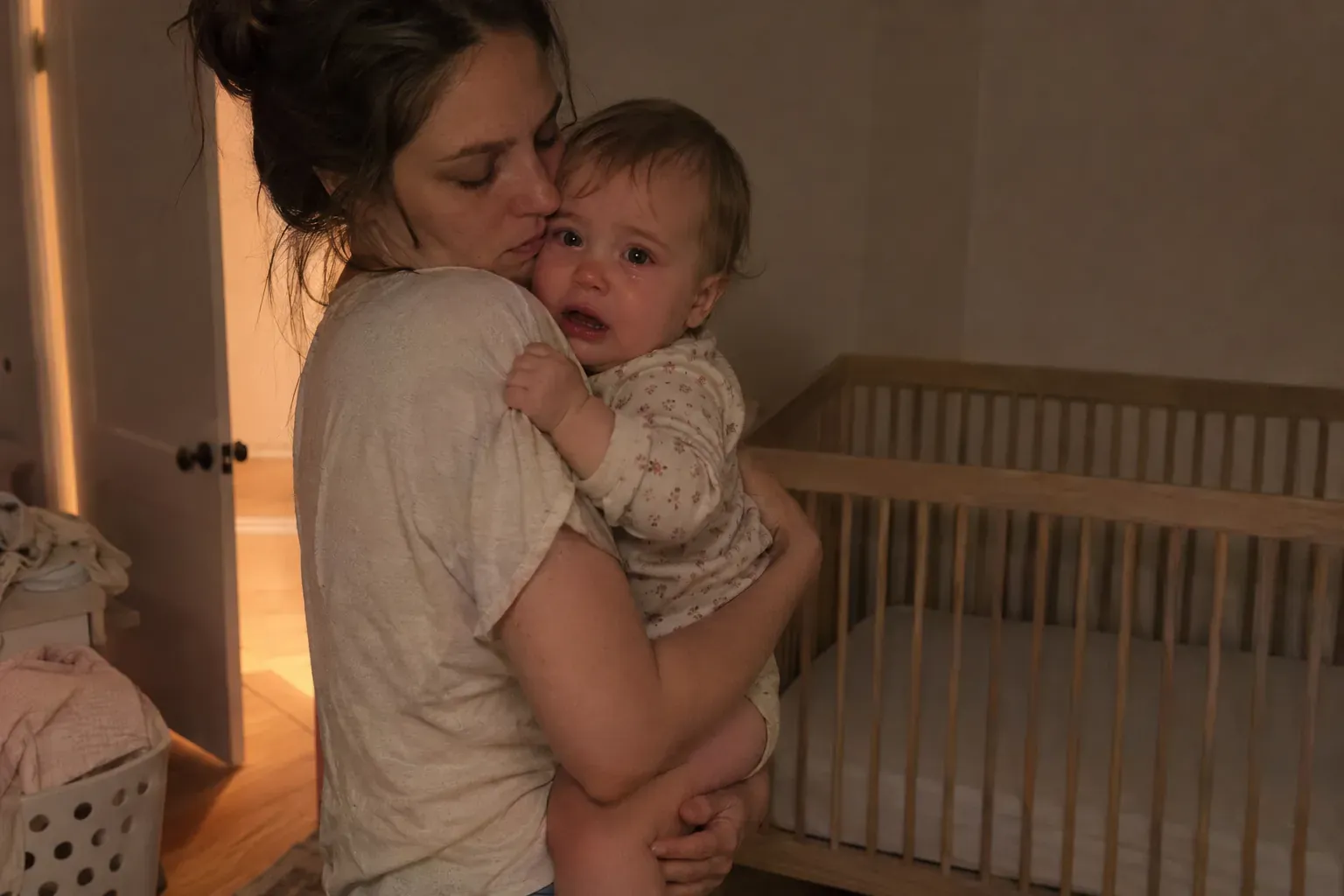
Separation anxiety can make a baby who was settling well start waking in the night and crying for you again. The American Academy of Pediatrics (AAP) says it can begin in the second half of the first year and cause many nights of disrupted sleep, with a baby waking several times and crying anxiously for one or both parents, often preferring one. A few babies show it as early as 4 to 5 months, most show it more strongly around 9 months, and it usually fades around the second birthday. It’s a normal stage of development. What helps is a calm, predictable bedtime and brief, consistent comfort at night, with your baby going back on their back in their own safe sleep space each time.
What is separation anxiety?
It’s a baby’s distress at being apart from the people they’re attached to, and it’s a sign of healthy development. The AAP explains that separation anxiety develops after a baby understands object permanence, the idea that people and things still exist when they can’t be seen, which it links to the 8 to 12 month stage. A baby who now knows you exist in the next room, and can’t yet be sure you’ll come back, has a good reason to protest when you leave.
The NHS says it’s very common for young children to have separation anxiety from around 6 months to 3 years. They may become clingy and cry when separated from their parents or carers. The NHS calls it a normal stage in a child’s development that should stop at around age 2 to 3.
When does separation anxiety start and how long does it last?
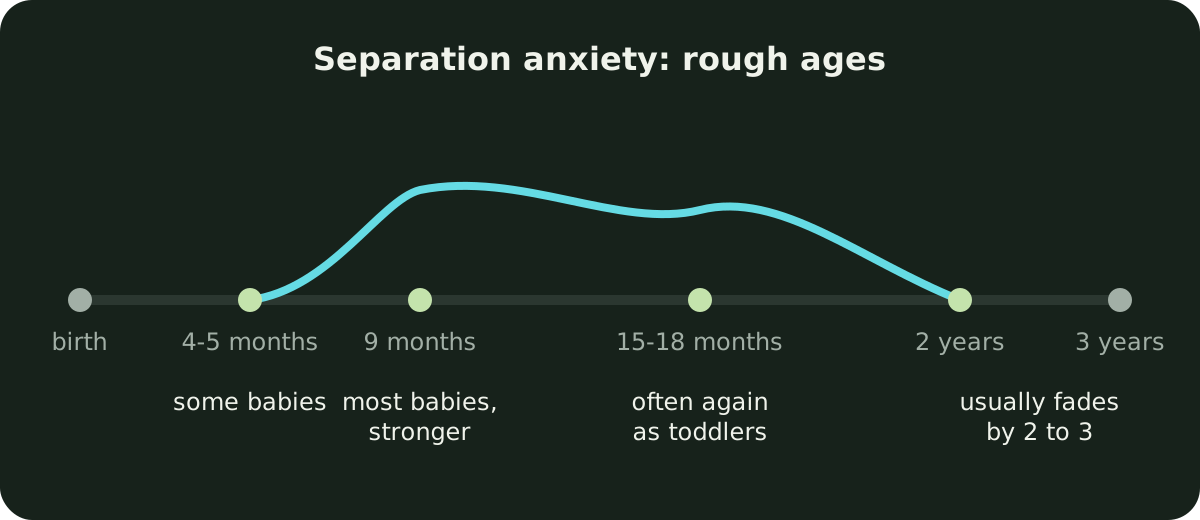
Ages vary from baby to baby, but the AAP gives these rough markers:
- 4 to 5 months: some babies already show object permanence and separation anxiety.
- Around 9 months: most babies develop a stronger version.
- 15 to 18 months: many toddlers go through it again, with loud, tearful protests that are hard to stop.
- Around the second birthday: the AAP says it usually fades. The NHS puts the end at around 2 to 3.
The sleep-disrupting stretch can last several months, the AAP says, and your child may need reassurance several times a night, night after night, until it passes. The AAP adds that hunger, tiredness and illness can make partings harder.
How does separation anxiety affect sleep?
Bedtime is a separation, and so is every waking in the dark. The AAP describes children in this stage waking several times and crying anxiously for one or both parents. The NHS lists difficulty sleeping and waking in the night among the ways anxiety can show in young children who can’t yet explain their feelings, alongside clinginess, irritability and tearfulness.
Some waking is normal at any age, anxious or not. In a small study of 44 one-year-olds, Higley and Dozier found that 93% woke at least once over three observed nights, and night waking was no more common in insecurely attached babies than in securely attached ones. What differed was the response: mothers in secure pairs generally picked up and soothed their babies when they fussed or cried. It’s one small study and can’t show cause and effect, but it fits the AAP’s advice that this stage needs a loving and consistent approach.
How can I make bedtime easier?
Most of what helps happens before the lights go out.
- Keep the routine predictable. The NHS says a simple, soothing bedtime routine may help babies settle, and that too much excitement just before bed can wake them up again. The AAP recommends a predictable routine for evening separations. Our post on a bedtime routine for a baby has a step-by-step version.
- Say when you’re leaving. The AAP suggests telling your child, in a matter-of-fact way, when you’re going, even for a minute, with something like “I’ll be right back”.
- Keep goodbyes short. The AAP says a long goodbye prolongs the anxiety. Give your full attention and affection, then leave.
- Keep your promises. Come back when you said you would. The AAP warns that popping back early to “visit” can set the anxiety off again.
- Practise in the daytime. Short separations with grandparents or other caregivers give your baby practice at learning that you come back.
- Introduce new sitters early. If someone new is putting your baby to bed, the AAP suggests they arrive well before bedtime to get acquainted. A familiar sitter is easier still.
What should I do when my baby wakes crying for me?
Go to them and comfort them calmly. The AAP says children in this stage may need reassurance several times a night, night after night, and that a loving and consistent approach is what helps, so try to respond in much the same way each time. Keep it quiet and low-key.
However tired you are, keep the safe-sleep basics the same at 3 am as at 7 pm. The AAP’s safe sleep guidance says:
- Put your baby on their back for every sleep, on a firm, flat surface, with no pillows, bumpers, loose blankets or soft toys.
- Share a room with your baby, without sharing a bed, for at least the first 6 months. The NHS gives the same 6 months.
- If you bring your baby into your bed to comfort them, put them back in their own sleep space before you go to sleep. If you might fall asleep, clear away pillows and blankets first.
- Don’t doze off holding your baby on a sofa or armchair. The AAP says the risk is up to 67 times higher when babies sleep with someone on a couch, soft armchair or cushion.
Our post on the ABCs of safe sleep covers the full set of rules, and our safe sleep advice for grandparents is useful to share with anyone helping at night.
Can my baby have a comfort blanket or soft toy in the cot?
Not in the first year. The AAP’s article on soothing separation anxiety suggests a special blanket or toy can help when you leave, but its safe sleep guidance says to keep soft objects and loose bedding out of the sleep area, because they raise the risk of suffocation, entrapment and strangulation. Those safe sleep recommendations apply to babies up to 1 year of age. So a comforter is fine for cuddles while your baby is awake and supervised, and stays out of the cot until their first birthday.
Is it separation anxiety or something else?
Not every new run of night wakings is separation anxiety. Wakings that start around 4 months are often put down to changing sleep cycles, which our post on the 4-month sleep regression covers. The signs the AAP and the NHS describe for separation anxiety are clinginess, crying when you leave, and crying at night for one or both parents, often one in particular. A simple note of when your baby wakes and what settled them can help you see the pattern over a week or two. A shared log, whether a notebook by the cot or an app such as Cradle: Baby Sleep Tracker by Zorest, means whoever does the next night knows what happened.
When should I call my pediatrician?
Separation anxiety is a normal stage, and most babies come through it with time and consistent comfort. Talk to your pediatrician if:
- you’re worried your child isn’t adjusting to being apart from you; the AAP says your pediatrician can help you both and make a plan
- the anxiety seems severe, goes on and on, or gets in the way of everyday life; the NHS says a visit to a GP is a good place to start
- the night wakings come with signs that your baby is unwell, or a change in feeding, breathing or behaviour that worries you
Trust your sense of your own baby. If something feels different from ordinary clinginess, it’s always fine to ask.
Sources
- Separation Anxiety and Sleeping (HealthyChildren.org, American Academy of Pediatrics)
- Soothing Your Child's Separation Anxiety (HealthyChildren.org, American Academy of Pediatrics)
- How to Keep Your Sleeping Baby Safe: AAP Policy Explained (HealthyChildren.org, American Academy of Pediatrics)
- Anxiety in children (NHS)
- Helping your baby to sleep (NHS)
- Nighttime maternal responsiveness and infant attachment at one year (Higley and Dozier, Attachment & Human Development, 2009, PMC)
This article is for general education and is not medical advice. Talk to your pediatrician about your baby's health.