When do babies stop needing night feeds?
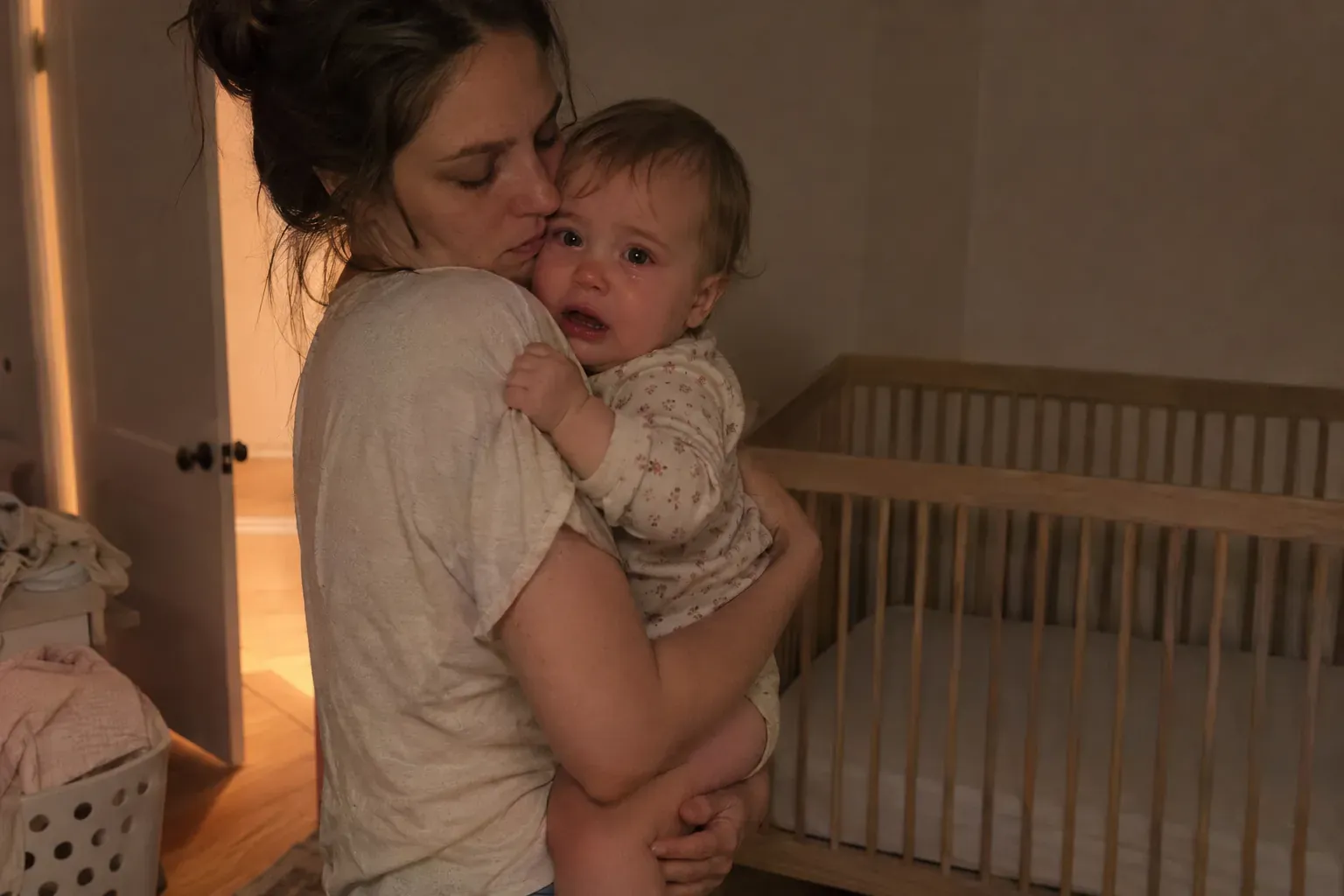
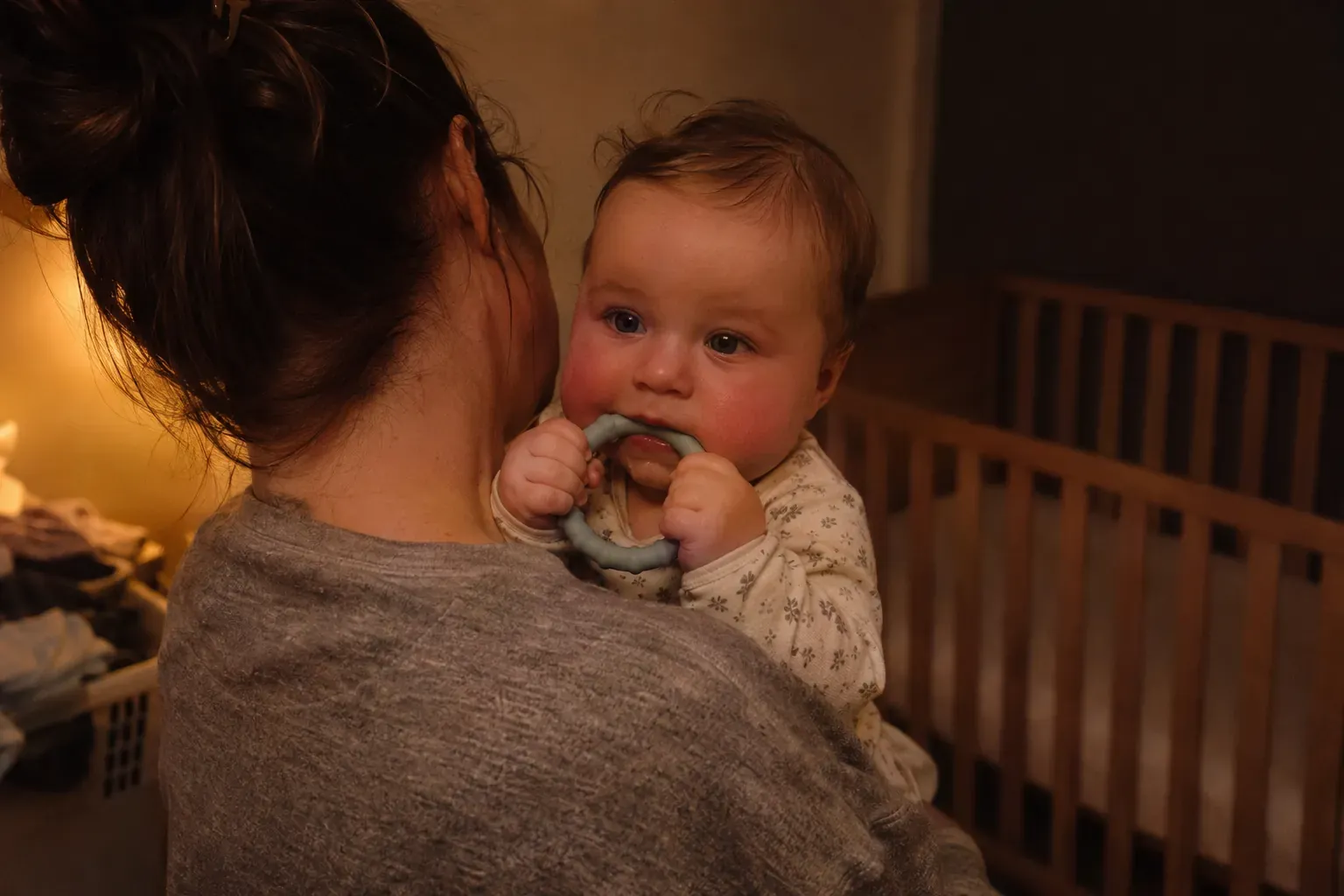
There’s no single age when babies stop needing night feeds. The American Academy of Pediatrics (AAP) says most formula-fed babies no longer need a middle-of-the-night feeding between 2 and 4 months of age, or once they weigh more than 12 pounds. The NHS says that for some babies aged 6 months to a year, night feeds may no longer be necessary, which also means some still need them. For a healthy, growing baby, night feeds usually shrink and drop away gradually over months, and your pediatrician can confirm when your baby is ready.
Do newborns need night feeds?
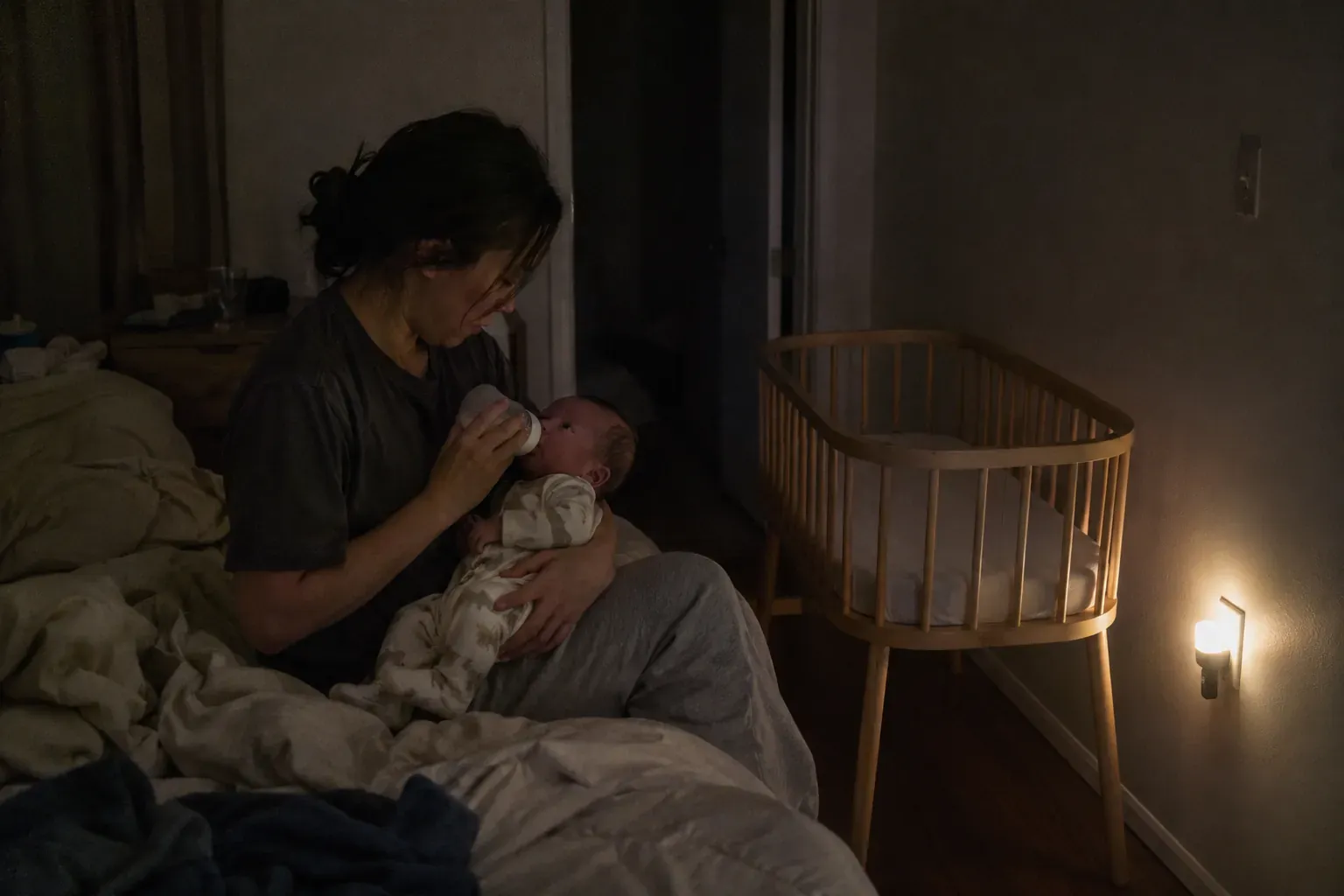
Yes. The NHS says babies will wake during the night because they need to be fed, and in the early weeks that means feeds round the clock. The AAP’s formula page goes further: if a baby sleeps longer than 4 to 5 hours in the first few weeks and starts missing feedings, wake them and offer a bottle. Our posts on how often a newborn should eat and how often newborns wake at night cover those first weeks in detail.
Here we look at what happens after those early weeks.
At what age do babies stop needing night feeds?
The guidance gives ranges, and they overlap.
- 2 to 4 months, formula-fed: the AAP says that between 2 and 4 months of age, or when the baby weighs more than 12 pounds (5.4 kg), most formula-fed babies no longer need a middle-of-the-night feeding.
- Around 4 months, term babies: the AAP’s preemie page says a baby born at term might sleep a full 6 to 8 hours at night by 4 months of age.
- 3 to 6 months: the NHS says that as your baby grows, they’ll need fewer night feeds and may be able to sleep for longer. Some babies sleep 5 to 8 hours or more at night, but not all.
- 6 months to a year: the NHS says that for some babies in this age range, night feeds may no longer be necessary, though teething or hunger may still wake them.
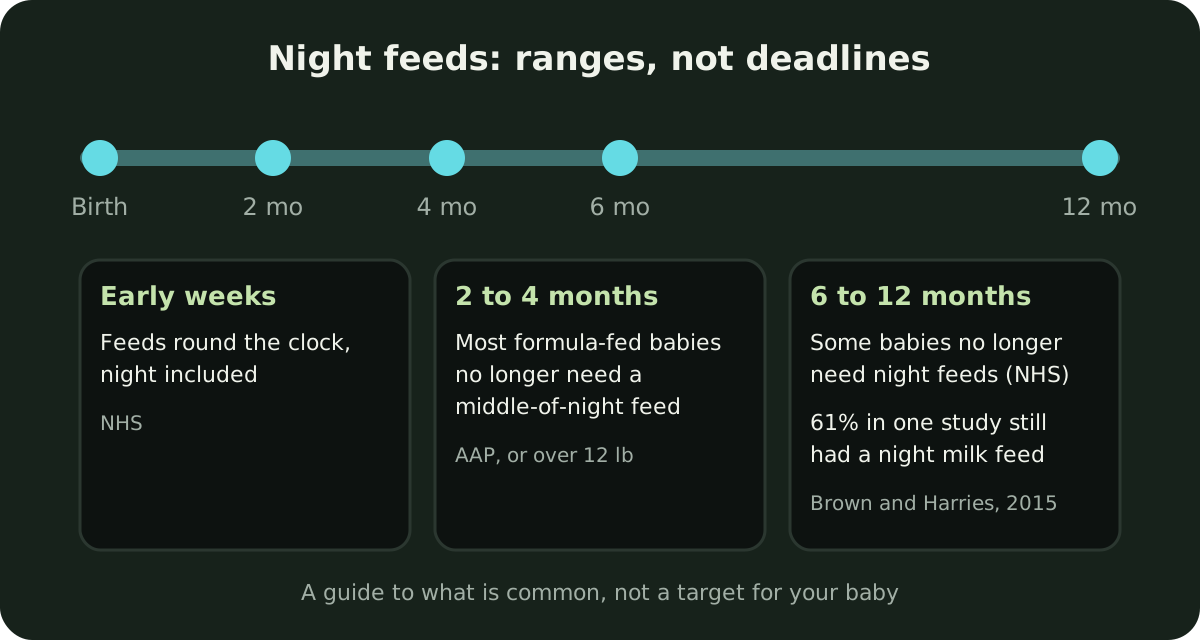
Each source hedges with “most”, “might” or “some”. They describe when many babies can manage without a night feed, and none of them sets an age by which a baby should stop.
Is it normal for an older baby to still feed at night?
Very common, according to the research. In a 2015 study published in Breastfeeding Medicine, 715 mothers of babies aged 6 to 12 months reported their babies’ night wakings and night feeds. Of those babies, 78.6% still regularly woke at least once a night, and 61.4% had one or more milk feeds at night. Both night wakings and night feeds fell as babies got older.
So if your 8-month-old still wants a feed at 3 am, they’re in the majority. The study is based on what parents reported in a single survey, so it shows patterns rather than causes, but it’s a useful reality check against the idea that every baby should be sleeping through by 6 months.
Do breastfed babies need night feeds for longer?
Not according to that same study. In the second six months, it found no difference in night wakings or night feeds between babies who were breastfed and babies who were formula-fed. The authors concluded that breastfeeding had no impact on infant sleep in the second 6 months.
The AAP’s figure of 2 to 4 months comes from its formula-feeding guidance, so it’s specifically about formula-fed babies. For breastfed babies, the NHS range of 6 months to a year is the broader guide. If you’re breastfeeding and wondering about dropping a night feed, talk it through with your pediatrician or health visitor first.
Will more food in the day stop night feeds?
It may reduce night feeds, but don’t expect it to stop the wakings. The 2015 study found that babies who had more milk or solid feeds during the day were less likely to feed at night, but they weren’t less likely to wake. The authors’ takeaway was that extra daytime calories may cut night feeding without reducing the need for a parent to get up.
That matches what the AAP says about older babies. Its sleep guidance says it’s normal for a 6-month-old to wake during the night and go back to sleep after a few minutes. Waking doesn’t always mean hunger.
How can I tell if my baby still needs a night feed?
Start with growth. The AAP says healthy, growing babies usually don’t need to be woken to breastfeed or take a bottle, and lists what “growing well” looks like:
- gaining weight steadily
- feeding well, 8 to 12 times a day if breastfeeding, or 5 to 8 times a day for a bottle-fed baby or older infant
- at least 4 wet diapers a day
- regular bowel movements
If your baby is doing all of that and is past the early weeks, a night waking may be about settling rather than hunger. From about 4 months, the AAP suggests putting babies down when they’re drowsy but not yet asleep, and not rushing in as soon as they cry, because babies need time to put themselves back to sleep.
If your baby wakes and feeds hungrily, they probably still need the feed. Babies differ, and the NHS points out that some sleep through soon while others don’t for a long time.
A simple log can show the pattern over a couple of weeks: how many times your baby wakes, how long each night feed lasts, and whether it’s getting shorter. If two of you share the nights, a shared app such as Cradle: Baby Sleep Tracker by Zorest lets both of you log night wakings and feeds in one record.
What about babies born early?
Premature babies often take longer. The AAP says a preterm baby may not sleep a 6 to 8 hour stretch until 6 to 8 months or later, compared with around 4 months for a term baby. If your baby was born early, ask your pediatrician how their growth affects night feeds.
How do I keep night feeds safe while they last?
Night feeds are where safe sleep rules get tested. Our post on the ABCs of safe sleep has the full rules, and the main ones are worth repeating here:
- After every feed, put your baby back on their back in their own crib or bassinet, on a firm, flat surface with nothing else in it.
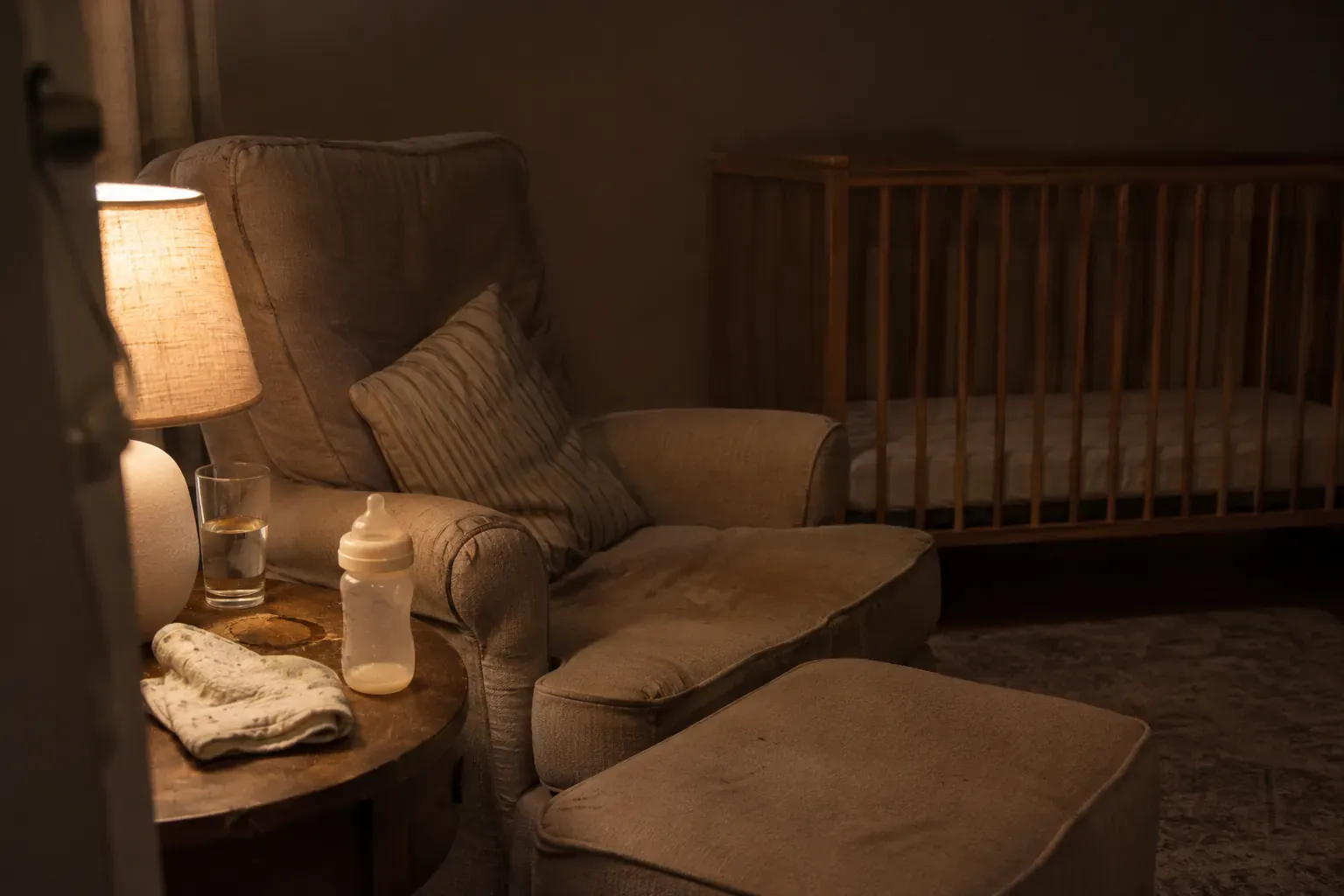
- Never put your baby in the crib with a bottle for comfort. The AAP says sugary liquid can lead to tooth decay and milk pooling in the mouth can lead to ear infections.
- Keep the feed quiet and dim. The AAP advises not stimulating or waking babies when you feed or change them at night, and speaking softly if you need to speak.
When should I call my pediatrician?
Talk to your pediatrician before cutting night feeds if your baby isn’t gaining weight steadily, isn’t feeding well, has fewer than 4 wet diapers a day, or isn’t having regular bowel movements. Those are the AAP’s signs that a baby may still need night feeds or more support with feeding.
Get help straight away if your baby is unusually hard to wake or floppy, isn’t feeding, or is having difficulty breathing, all signs the NHS lists as reasons to get urgent help. If your baby is 3 months or younger and has a rectal temperature of 100.4 degrees Fahrenheit (38 degrees Celsius) or higher, the AAP says to call your pediatrician immediately. If your baby has a medical condition, ask your pediatrician when night feeds can safely go.
Sources
- Amount and Schedule of Baby Formula Feedings (HealthyChildren.org, American Academy of Pediatrics)
- Preemie Sleep Patterns (HealthyChildren.org, American Academy of Pediatrics)
- Sleeping Through the Night (HealthyChildren.org, American Academy of Pediatrics)
- Getting Your Baby to Sleep (HealthyChildren.org, American Academy of Pediatrics)
- Helping your baby to sleep (NHS)
- Is your baby or toddler seriously ill? (NHS)
- Fever and Your Baby (HealthyChildren.org, American Academy of Pediatrics)
- Infant sleep and night feeding patterns during later infancy (Brown and Harries, Breastfeeding Medicine, 2015, PubMed)
This article is for general education and is not medical advice. Talk to your pediatrician about your baby's health.