When should my baby start solid foods?
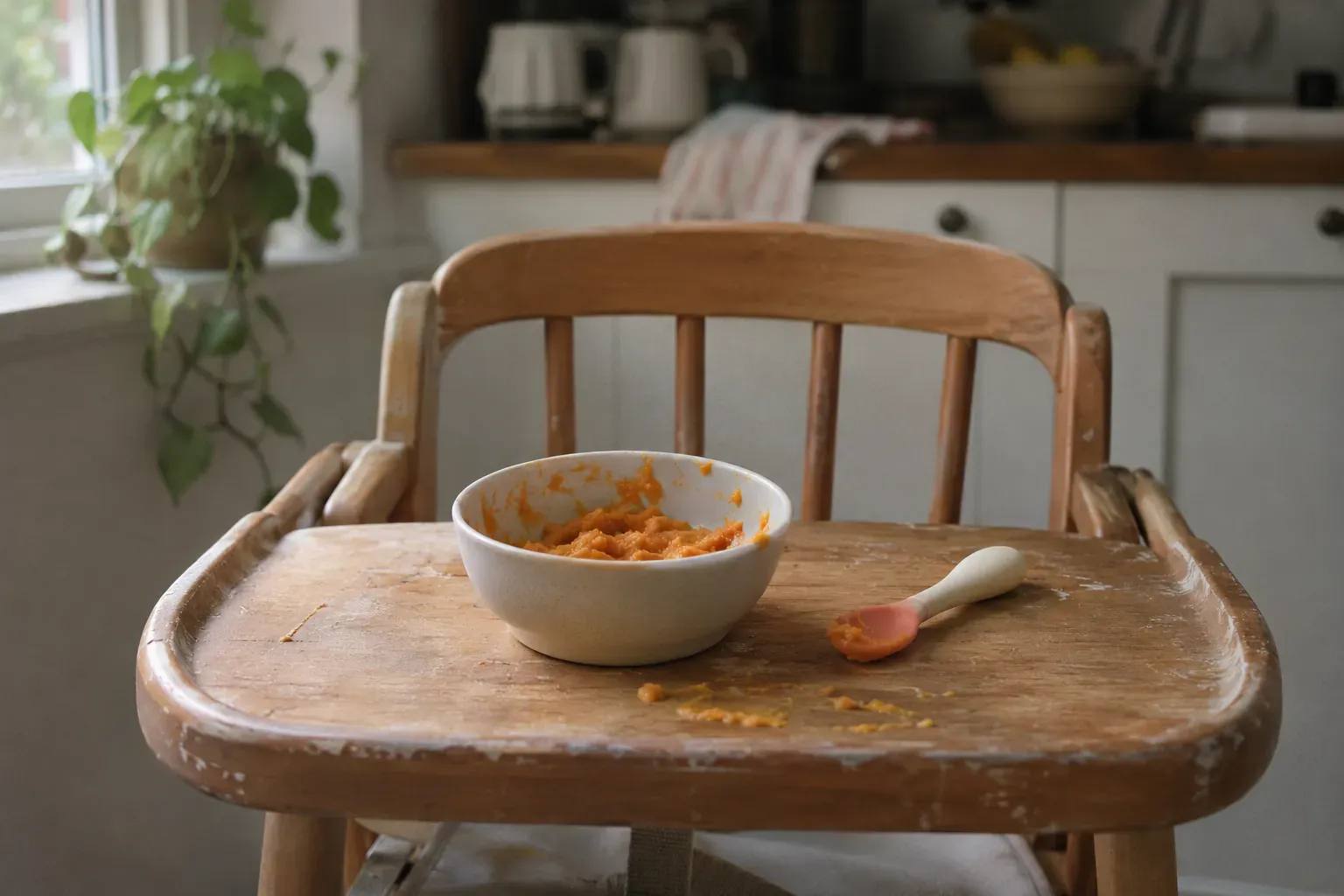
Most babies are ready to start solid foods at around 6 months of age. The American Academy of Pediatrics (AAP) recommends only breast milk for approximately the first 6 months, the CDC says babies can begin solids at about 6 months and that starting before 4 months is not recommended, and the World Health Organization (WHO) recommends exclusive breastfeeding for the first 6 months with solid foods introduced from six months. Age is only part of the answer. Your baby also needs to show they’re physically ready, and if your baby was born early, ask your pediatrician about timing.
Why around 6 months and not earlier?
The NHS gives the same answer as the AAP, CDC and WHO: solids should start when your baby is around 6 months old.
Some behaviour that looks like hunger isn’t a sign of readiness. The NHS says chewing fists, waking more than usual at night and wanting extra milk feeds are all normal and don’t necessarily mean a baby is hungry or ready for solids. Starting solids won’t make a baby sleep through the night.
What are the signs my baby is ready?
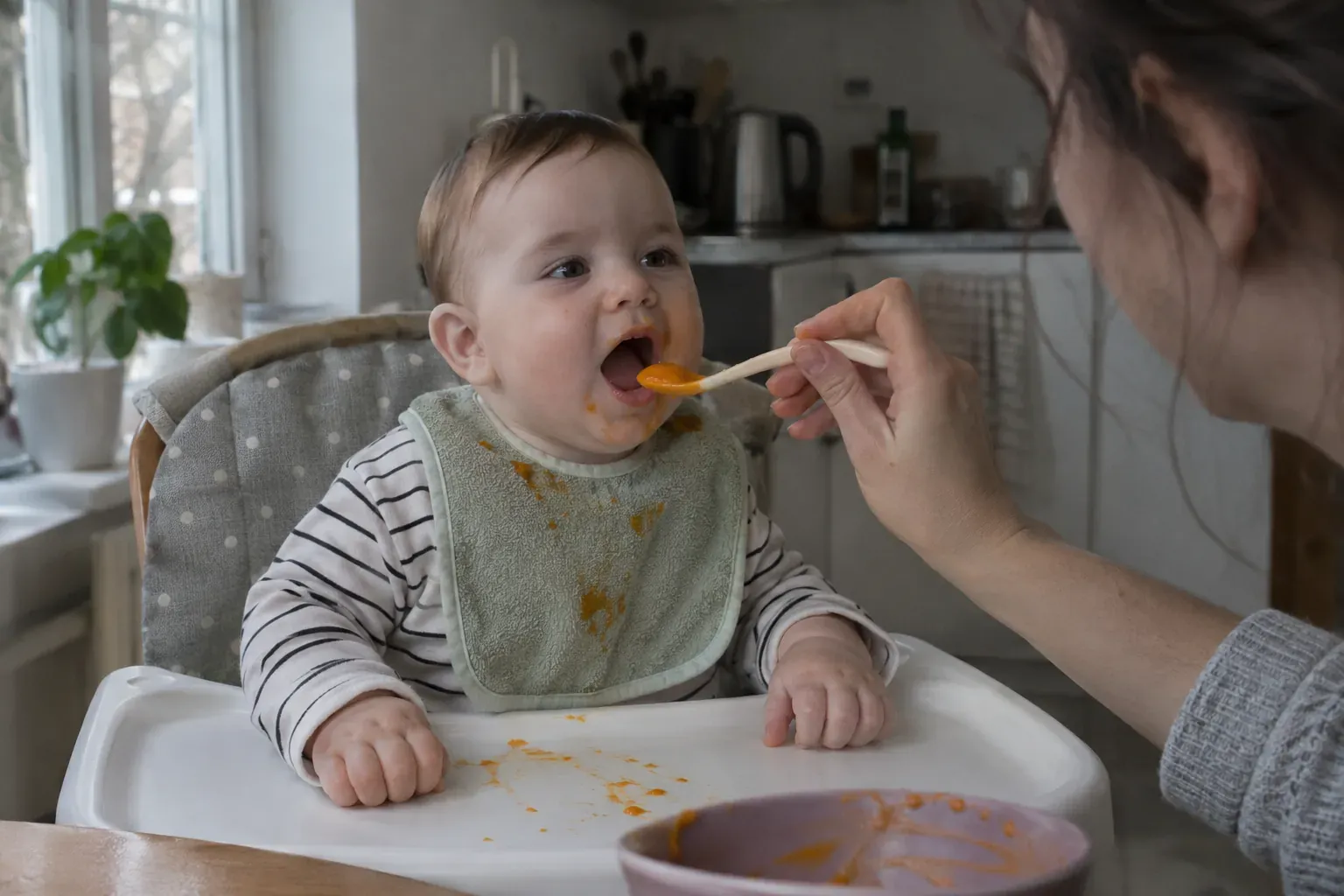
The signs are developmental. The CDC lists these:
- sits up alone or with support
- can control their head and neck
- opens their mouth when you offer food
- swallows food rather than pushing it back out onto their chin
- brings objects to their mouth
- tries to grasp small objects, such as toys or food
- moves food from the front to the back of their tongue to swallow
The AAP’s HealthyChildren.org page adds that your baby should be able to sit in a high chair or infant seat with good head control. The “doubled birth weight” rule of thumb comes from that same AAP page, which says babies who have doubled their birth weight, typically at about 4 months, may be ready, while still recommending only breast milk for approximately 6 months. The CDC and NHS don’t use weight as a sign. The NHS lists three: your baby can stay sitting and hold their head steady, can co-ordinate eyes, hands and mouth to bring food to their mouth, and can swallow food rather than spit it back out.
What should the first foods be?
The CDC says you don’t need to give food in a certain order. Both the CDC and the AAP suggest one single-ingredient food at a time, waiting 3 to 5 days before the next so you can spot a reaction. The CDC says mashed, pureed or strained foods that are very smooth are easiest at first, with thicker and lumpier textures as your baby’s ability to eat develops.
Iron matters early. The AAP says to include foods that provide iron and zinc, such as baby food made with meat or iron-fortified cereals. The CDC says that once your child starts eating foods around 6 months, it’s important to give foods with enough iron, and lists red meat, iron-fortified infant cereals, beans and lentils, eggs and dark green leafy vegetables. If you use infant cereal, the CDC suggests oat, barley and multigrain as well as rice, because only rice cereal can increase arsenic exposure. Whether your baby needs iron drops before 6 months is a question for your pediatrician, according to both the CDC and the AAP.
When should I introduce peanut, egg and other allergens?
When you introduce other foods. The CDC says to introduce potentially allergenic foods at the same time as other foods, and names eggs, shellfish, nut butters and wheat. The AAP says there’s no reason to delay foods thought of as allergens, such as peanut products, eggs or fish, and that there’s no evidence that waiting beyond 4 to 6 months prevents allergy.
For peanut, the AAP endorses the national guidance of adding infant-safe forms of peanut to the diet for most babies as early as around 6 months, after other solid foods are tolerated. Babies with severe eczema that needs prescription treatment, an egg allergy, or both are considered high risk. For them, the AAP says peanut allergy testing and introduction under a health care provider’s supervision is a consideration, and peanut products may be introduced as early as 4 to 6 months. The CDC says the same: if your child has severe eczema or an egg allergy, talk with your child’s doctor or nurse about when and how to safely introduce foods with peanuts.
Never give whole peanuts or tree nuts to a baby; the AAP says they’re choking hazards. HealthyChildren.org suggests mixing a small amount of peanut butter into cereal, pureed fruit or yogurt, or thinning it with breast milk or formula and feeding it by spoon. After each new food, watch for diarrhea, rash or vomiting; if they appear, stop that food and consult your pediatrician. The studies showing benefit used continued, regular servings, so keep allergenic foods in the diet once they’re tolerated. Whatever your baby’s risk, ask your pediatrician how and when to start, especially if your baby has eczema or has reacted to a food.
What foods should I avoid in the first year?
- Honey until 12 months. The CDC says honey given before 12 months may cause botulism, a severe food poisoning, and not to add it to food, water, formula or a pacifier. The NHS says the same.
- Cow’s milk as a drink until 12 months. The CDC says it may cause intestinal bleeding, is hard on a baby’s kidneys and doesn’t have the right nutrients. The NHS says small amounts in cooking are fine from around 6 months.
- Juice. The CDC says children under 12 months should not drink any fruit or vegetable juice.
- Added sugar and salt. The CDC says children under 24 months should not have added sugars, and to avoid foods high in salt. The NHS adds that you don’t need to add sugar or salt to a baby’s food, and that salty food isn’t good for their kidneys.
- Choking hazards. The CDC’s list includes whole grapes, cherry tomatoes, hard raw carrot or apple, raisins, nuts and seeds, nut butter by the spoonful, hot dogs, chunks of meat or cheese, whole beans, popcorn, hard or chewy candy and marshmallows. The NHS says whole nuts should be crushed or flaked for children under 5.
To lower the risk, the CDC says to prepare foods that dissolve easily with saliva, cut food small or mash it, feed small portions, and watch your baby at all times while they eat, sitting upright in a high chair rather than in a car seat or stroller.
Do milk feeds continue once solids start?
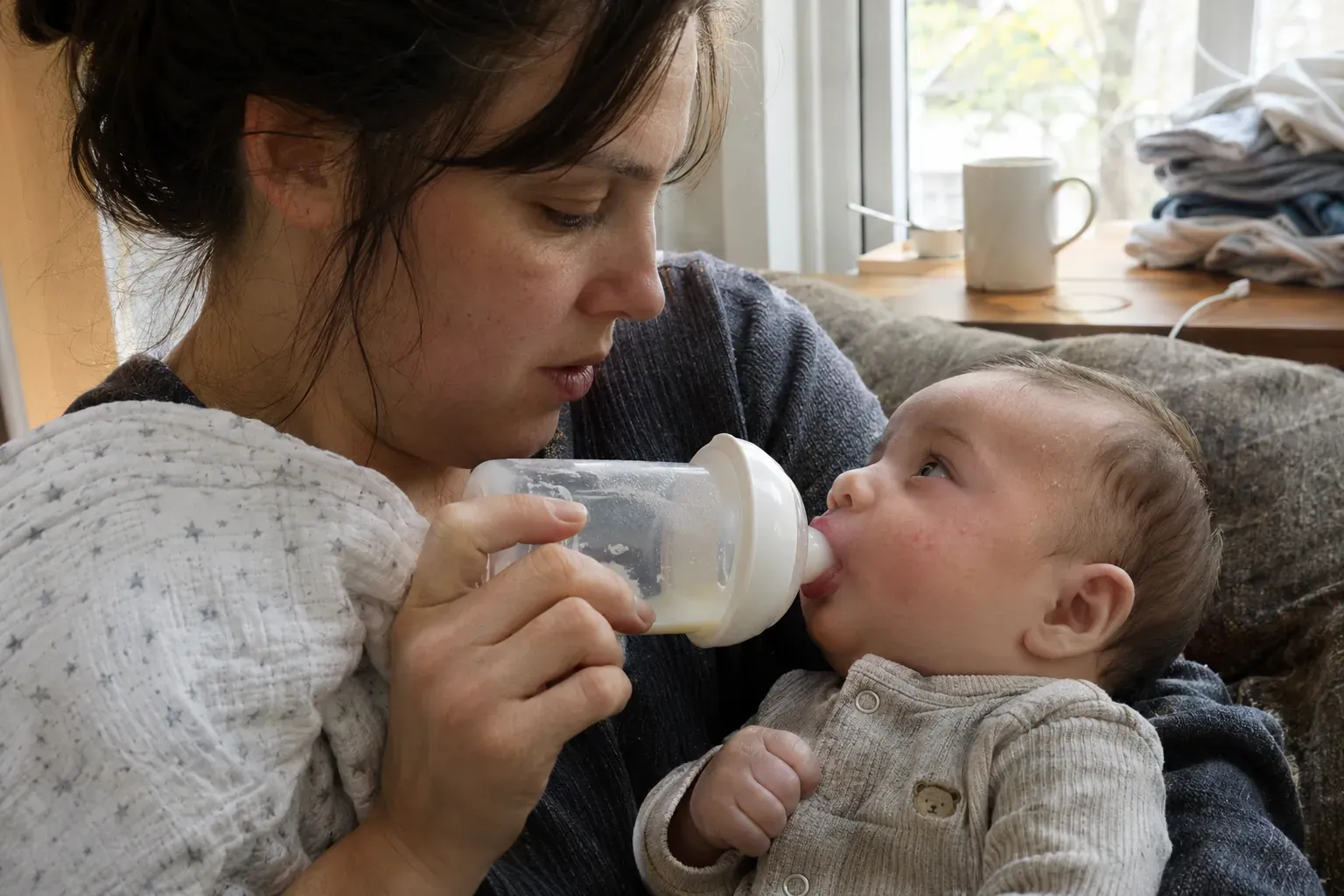
Yes. The AAP says that at first your baby will still get most of their nutrition from breast milk, formula or both, and the CDC says breast milk remains the most important source of nutrition after solids begin. The NHS says breast milk or infant formula should remain the main drink during the first year, and the AAP says you can keep breastfeeding for as long as you and your child wish. Our post on how often a newborn should eat covers the milk-only months.
If you log feeds, Cradle: Baby Sleep Tracker by Zorest logs solids next to breastfeeding, bottles and pumping in one timeline. If you mainly track nursing and pumping, our roundup of baby apps that track breastfeeding and pumping compares the options.
When should I call my pediatrician?
Call right away, or call 911, if your baby shows signs of a serious allergic reaction. HealthyChildren.org lists hives, itchy rashes or swelling; sneezing, wheezing, coughing or throat tightness; vomiting, diarrhea or belly pain; and pale skin, feeling faint or loss of consciousness. In babies, signs can be less obvious: eye rubbing, repeatedly sticking the tongue out, excessive crying, arching of the back and reduced muscle tone. For anaphylaxis, the AAP says epinephrine should be given right away, followed by a call to 911.
Also talk to your pediatrician if:
- your baby was born prematurely (the NHS says to ask your health visitor or GP when to start solids)
- your baby has eczema or an egg allergy, before you introduce peanut
- you have questions about iron or vitamin D supplements
- you’re worried your baby is eating too much or too little
If something feels wrong, call.
Sources
- Starting Solid Foods (HealthyChildren.org, American Academy of Pediatrics)
- When, What, and How to Introduce Solid Foods (CDC)
- Infant and young child feeding (World Health Organization)
- Baby's first solid foods (NHS)
- Iron (CDC Infant and Toddler Nutrition)
- When to Introduce Egg, Peanut Butter and Other Common Food Allergens to a Baby (HealthyChildren.org)
- AAP Clinical Report Highlights Early Introduction of Peanut-based Foods to Prevent Allergies (HealthyChildren.org)
- Foods and Drinks to Avoid or Limit (CDC)
- Choking Hazards (CDC)
- Food and drinks to avoid (NHS Start for Life)
- Food Allergies in Children (HealthyChildren.org)
This article is for general education and is not medical advice. Talk to your pediatrician about your baby's health.