How often should I pump?
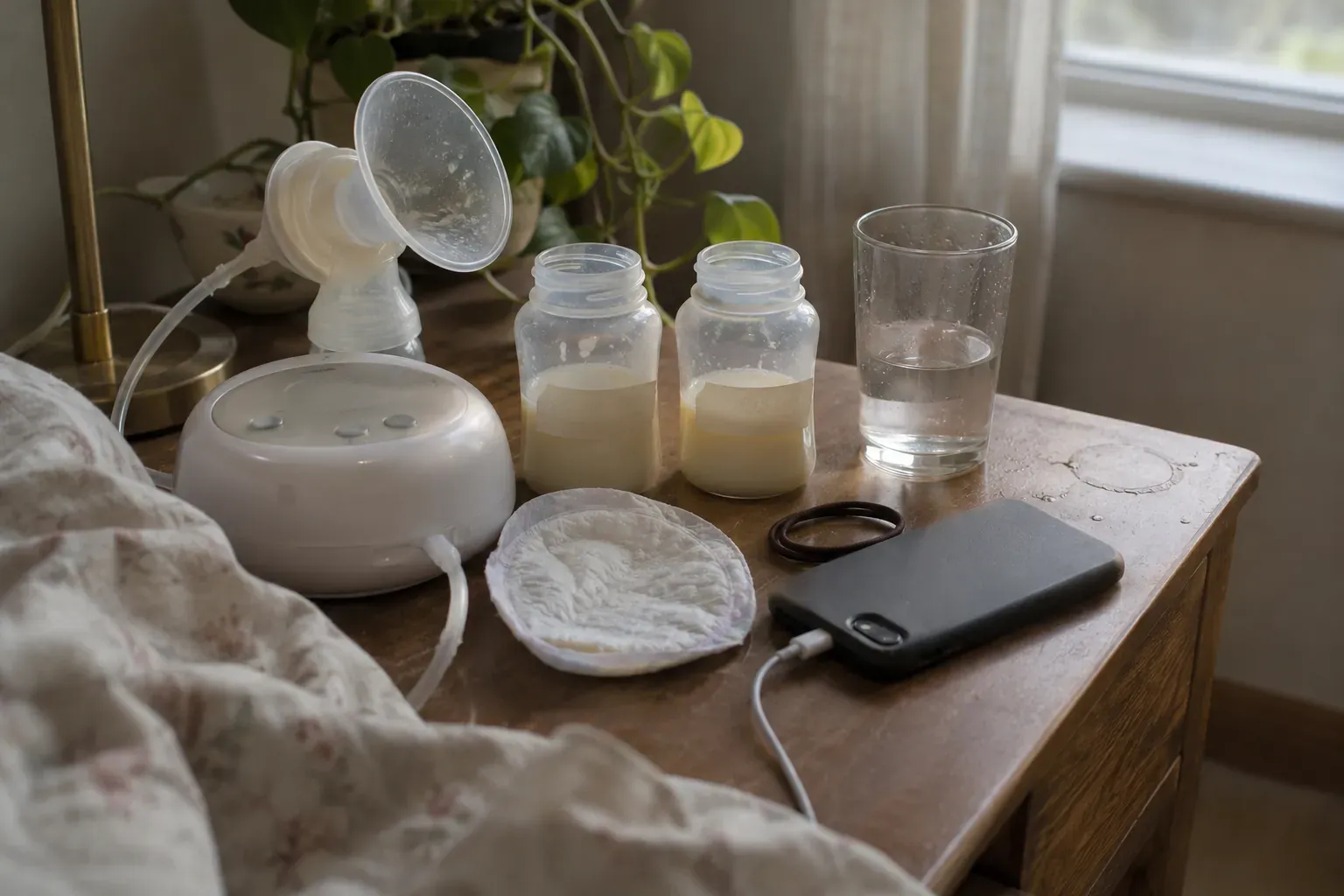
If you’re pumping instead of breastfeeding, pump about as often as your baby would feed. The CDC says that when you’re away from your baby or exclusively pumping, you should try to pump as often as your baby is drinking breast milk, which helps your body make about the amount of milk your baby needs. For a newborn, that’s often: the CDC says newborns feed 8 to 12 times in 24 hours, as often as every 1 to 3 hours, including at night. If your baby is premature or in hospital, the NHS suggests aiming for 8 to 12 times in 24 hours, including once at night.
The right number depends on why you’re pumping; the NHS says how often and how much you express depends on why you’re doing it.
How often should I pump if I’m exclusively pumping?
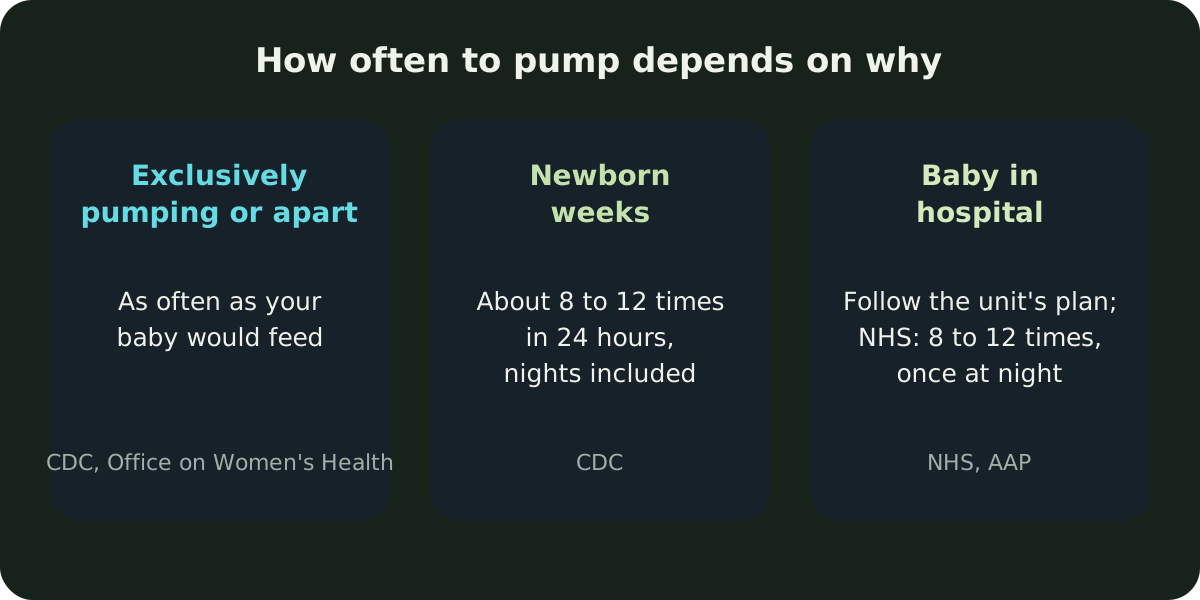
Match your baby’s feeds. The CDC says that if you’re not breastfeeding at the breast, you should express or pump as often as your baby normally eats, because removing milk is what signals your breasts to keep making it. In the first weeks, while your supply is building, the CDC says a baby may want to eat as often as every 1 to 3 hours, day and night, and that 8 to 12 feeds in 24 hours is a sign of a baby getting enough.
As your baby grows and their feeds change, the same rule applies: pump when your baby would be feeding. Our post on how often a newborn should eat has the feeding numbers in more detail.
How often should I pump for a premature or sick baby?
Follow your baby’s care team first, because their advice is tailored to your baby. The guidance we found differs a little:
- The NHS says that if your baby is too small or unwell to breastfeed, start expressing as soon as possible, and aim for 8 to 12 times in 24 hours, including once at night.
- The American Academy of Pediatrics, on HealthyChildren.org, says mothers of very premature or very low birth weight babies should pump within 6 to 8 hours after delivery, then 5 to 6 times a day, every 3 to 4 hours with at least one session in the middle of the night, and more often as their breasts begin to fill. It suggests having a comfortable electric double pump.
Both agree on one point: at least one session at night.
How often should I pump when I go back to work?
Pump at work as often as your baby will be feeding while you’re apart. The Office on Women’s Health says to pump during the times your baby would normally eat, because this helps you keep making milk. The CDC suggests thinking ahead about how often you’ll need to pump at work, and practising with your pump before you go back so you’re comfortable with it. It also suggests you could start pumping a few weeks before returning to work or school.
HealthyChildren.org says it’s common for supply to drop after going back to work, and that this is usually down to skipped pumping sessions or not pumping long enough. Its advice for boosting supply is to pump more often, for at least 10 minutes per session, even if your milk stops flowing before then.
In the US, the CDC notes that the federal PUMP Act requires many employers to give reasonable break time to express milk for one year after your child’s birth, and a clean, private space that isn’t a bathroom. Some employees aren’t covered, and state laws may add protections.
Do I need to pump at night?
In the early weeks, yes, if you’re pumping in place of feeds. The CDC’s newborn guidance includes night feeds in the every 1 to 3 hours pattern, so pumping as often as your baby feeds includes the night too. Both the NHS and the AAP include at least one night session for parents expressing for a baby in hospital.
If your baby is in the room with you at night, it’s tempting to pump while you’re both drowsy. Put your baby back in their own sleep space, on their back, on a firm, flat surface, before you settle in. Our post on the ABCs of safe sleep covers the full AAP guidance.
How long should each pumping session last?
The NHS says to allow about 30 to 45 minutes per session when you’re starting out, and that once you’re experienced, emptying both breasts may take about 15 to 20 minutes. HealthyChildren.org’s advice for building supply is at least 10 minutes per session, even if milk stops flowing sooner.
Should I pump both breasts at the same time?
It can save time. The Office on Women’s Health says double pumping, pumping both breasts at once, may collect more milk in less time, which helps if you’re going back to work or school full time. A small 2012 study of 31 breastfeeding mothers, published in Breastfeeding Medicine, found that pumping both breasts at once triggered more milk ejections and removed more milk than pumping one side and then the other, and the milk had a higher cream content.
What if I’m not pumping enough milk?
Start with frequency. The CDC suggests adding an extra pumping session if pumping enough milk is difficult. HealthyChildren.org points out that a pump may remove less milk than an effective nursing baby does, so a low number in the bottle doesn’t always mean low supply.
A few things can help your milk start flowing when your baby isn’t with you. The Office on Women’s Health suggests looking at a photo of your baby or holding something with their scent, using a warm cloth, or massaging your breasts. The NHS adds sitting near your baby, watching a video of them, and distracting yourself with a book, music or TV if you’re anxious about how much you’re getting.
Keeping a simple log of when you pump and how much you collect makes the pattern easier to see over a few days, and gives you real numbers if you talk to a lactation consultant. Cradle: Baby Sleep Tracker by Zorest, for example, logs pumping sessions in the same timeline as feeds and sleep. Our roundup of apps that track breastfeeding and pumping compares the options.
Can I pump too much?
The sources we read don’t set an upper limit for healthy parents. The CDC’s rule of matching your baby’s feeds is meant to help your body make about the amount your baby needs. The one explicit caution we found is from the NHS on mastitis: express enough milk for your baby if feeding is too painful, but don’t express more than your baby needs. If you’re thinking of pumping much more often than your baby feeds, talk it through with a lactation consultant first.
Frequent pumping is normal in some phases. If your baby is cluster feeding in the evenings and you’re pumping for those feeds, extra sessions then are expected; our post on cluster feeding explains what’s typical.
When should I call a doctor or my pediatrician?
Pumping shouldn’t hurt. HealthyChildren.org says to get help if it does. Call your own doctor or midwife if you notice signs of mastitis, which the NHS lists as:
- a swollen area on your breast that may feel hot and painful to touch
- a wedge-shaped lump or hard area
- a burning pain that’s constant or only when you feed or pump
- nipple discharge, which may be white or streaked with blood
- flu-like symptoms such as aches, a high temperature, chills or tiredness
The NHS says to see a doctor if your symptoms haven’t improved 12 to 24 hours after treating them at home.
HealthyChildren.org also lists severe engorgement, breasts that stay full and hard, and severe pain as warning signs worth a check.
Call your pediatrician if your baby still seems hungry after most feeds, is under their birth weight at two weeks, or, after 7 days, has fewer than 6 wet diapers and 4 stools a day. A lactation consultant can help you build a pumping plan that fits your baby and your day.
Sources
- Pumping Breast Milk (CDC)
- Newborn Breastfeeding Basics (CDC)
- Breastfeeding and Returning to Your Workplace (CDC)
- Expressing breastmilk: hints, tips and more help (NHS Best Start in Life)
- Expressing and storing breast milk (NHS)
- Mastitis (NHS)
- Pumping and storing breastmilk (Office on Women’s Health)
- Expressing Breast Milk at Work: Tips for Nursing Parents (HealthyChildren.org, American Academy of Pediatrics)
- Mother’s Own Milk for Very Premature & Very Low Birth Weight Babies (HealthyChildren.org)
- Warning Signs of Breastfeeding Problems (HealthyChildren.org)
- How to Keep Your Sleeping Baby Safe: AAP Policy Explained (HealthyChildren.org)
- Simultaneous breast expression in breastfeeding women is more efficacious than sequential breast expression (Breastfeeding Medicine, 2012)
This article is for general education and is not medical advice. Talk to your pediatrician about your baby's health.